How to Make Essential Oils from Herbs at Home?
Most home essential oil guides skip a fact that matters: you cannot make true essential oil in a kitchen pot. Essential oil is the concentrated volatile compound extracted from a plant, and producing it requires steam distillation with equipment most homes do not have. What you can make at home is an infused oil, a carrier oil that has absorbed the plant’s aromatic compounds. It smells like the herb. It works in salves and massage blends. It is not the same thing as the bottle you buy at the store, and treating it as if it is will lead to wasted herbs and disappointed expectations.
This guide tells you what actually works. It covers the steam distillation method if you want to invest in a still, the oil infusion method if you want a practical home project, and the safety rules that apply regardless of which route you choose. You will leave knowing exactly what you can produce in your kitchen and what you cannot.
What Is the Difference Between Essential Oil and Infused Oil?
Essential oil is a concentrated volatile liquid extracted from plant material, typically through steam distillation. The steam ruptures the plant’s oil glands, carrying the volatile compounds into a condenser where they separate from water. The result is a highly concentrated product where a single drop can contain the aromatic equivalent of many plants .
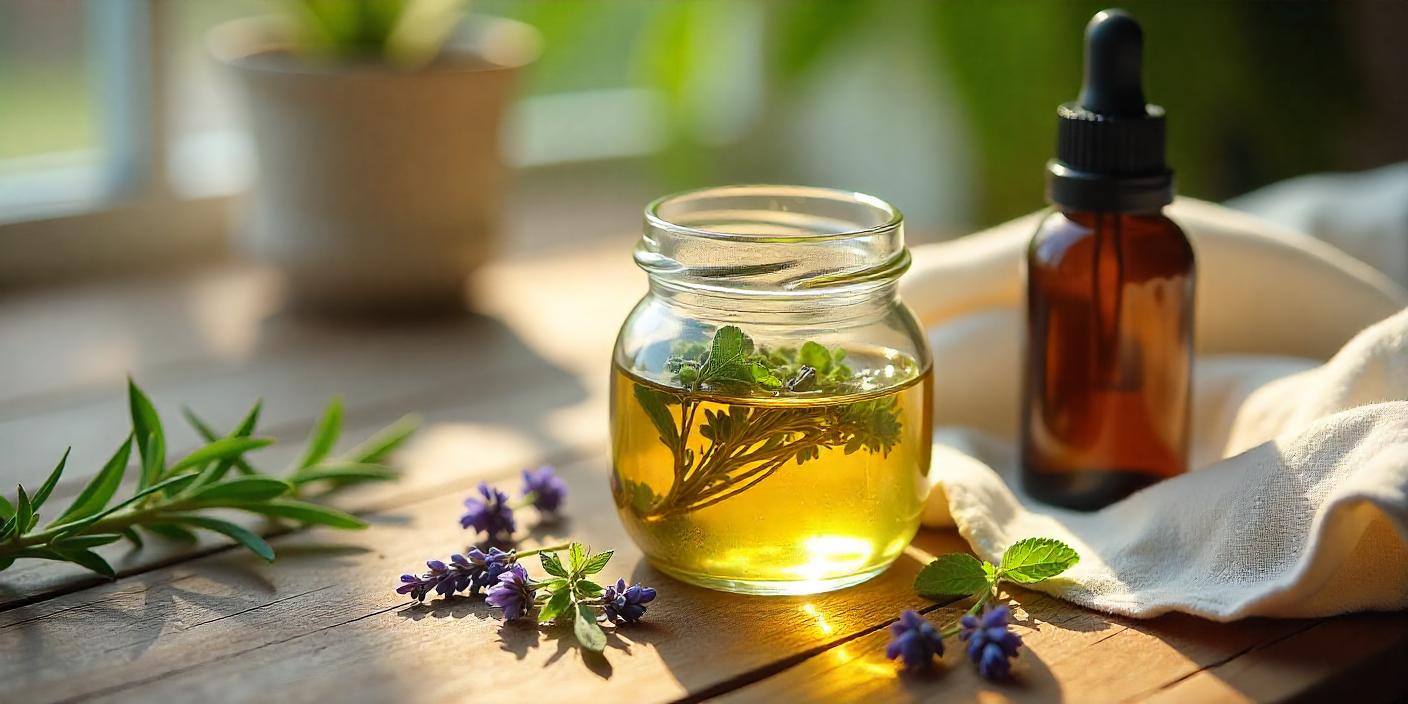
Infused oil, sometimes called macerated oil, is made by soaking plant material in a carrier oil such as olive, jojoba, or sunflower oil. Over time, the plant’s fat-soluble compounds leach into the carrier. The result is a gentle, diluted product that smells of the herb and carries some of its properties, but at a fraction of the concentration of true essential oil .
The practical difference matters for everything that follows. A recipe calling for five drops of essential oil cannot be swapped for five drops of infused oil without changing the outcome. Infused oils are for direct skin application in salves and massage blends. Essential oils require dilution because they are potent enough to burn skin at full strength .
The Steam Distillation Method: What It Actually Requires
To make true essential oil at home, you need a still. Not a pot with a bowl of ice on top. A still. The basic setup involves a boiling chamber, a column where steam passes through plant material, a condenser to cool the vapor back into liquid, and a receiving vessel to collect the distillate .
The science is straightforward. Water boils, steam rises through the plant material, and the heat ruptures the oil glands, releasing volatile compounds. The steam and oil vapor travel together into the condenser, where cooling returns them to liquid form. Oil and water do not mix, so the essential oil floats on top of the hydrosol, the aromatic water that is a byproduct of the process .
The equipment is not cheap. A basic copper or glass home still starts around $150 to $300 on Amazon. The process takes hours. A small batch might yield a few milliliters of oil from a substantial quantity of plant material. This is why true essential oil is expensive. The plant-to-oil ratio is brutal.
A 2024 review in the journal Food Chemistry confirms that traditional extraction methods have significant drawbacks, including low efficiency and high energy consumption, which is why industrial producers have moved toward ultrasound-assisted and microwave-assisted extraction . You cannot replicate those methods at home. Instead, accept the limitations of a basic still and work within them.
The plant material matters. Fresh herbs work best for steam distillation because the essential oil is still present in the glands. Dried herbs have lost some of their volatile content, though they can still be distilled with the addition of water . Rosemary, lavender, mint, and sage are all reasonable choices for a home still. Citrus peels are a special case because the oil is in the rind and can be expressed mechanically rather than distilled.
The Oil Infusion Method: What You Can Actually Do This Weekend
If you do not want to buy a still, the oil infusion method is the practical alternative. It produces a usable aromatic oil for salves, massage blends, and homemade skincare. It does not produce essential oil.
The method is simple. Dry your herbs first. Fresh herbs contain water, and water in an infusion oil creates a breeding ground for mold and bacteria. Spread the herbs in a single layer on a baking sheet and leave them in a warm, dry place for several days, or use a dehydrator on the lowest setting. The herbs should be crisp, not leathery.
Fill a clean glass jar with the dried herbs, loosely packed. Cover them completely with a carrier oil. Olive oil is traditional, but it has a strong scent that can compete with delicate herbs. Jojoba or fractionated coconut oil are neutral alternatives. Make sure no plant material is exposed to air, because exposed material will mold.
Seal the jar and place it in a warm spot out of direct sunlight. Shake it daily. After two to four weeks, strain the oil through cheesecloth, squeezing the plant material to recover as much oil as possible. Bottle the strained oil in a dark glass container and store it in a cool place .
The result is a gentle, herb-scented oil that carries some of the plant’s properties. It is not concentrated enough to require the same safety precautions as essential oil, but it is also not a substitute for essential oil in recipes that call for one.
The Safety Rules That Apply No Matter What You Make
Essential oils are not harmless because they come from plants. A 2021 study from the National Institute for Occupational Safety and Health analyzed 14 commercially available essential oils and found 1,034 volatile organic compounds emitted, of which 251 were classified as potentially hazardous . Fewer than 1 percent of those compounds were listed on any product label.
The French Agency for Food, Environmental and Occupational Health and Safety reported that calls to poison control centers regarding essential oils rose steadily between 2011 and 2021. In a third of accidents involving children, an essential oil had been administered by mistake instead of a medicine .
The rules for safe use are not complicated, but they are non-negotiable. Never apply undiluted essential oil to skin. A carrier oil or lotion is not optional. Keep essential oils out of reach of children and pets. Do not use them on infants or pregnant women without medical advice. Do not ingest them unless a qualified professional has specifically instructed you to do so for a specific product. Ventilate rooms when using a diffuser .
For infused oils, the risks are lower but not zero. If you use fresh herbs and do not dry them properly, the oil can grow mold. If you use a carrier oil with a short shelf life, such as grapeseed, the infusion can go rancid. Store infused oils in the refrigerator if you used a fragile carrier oil, and discard them if they smell off.
What About the Microwave Method?
A French educational resource describes a microwave-assisted extraction device that can produce small quantities of essential oil and aromatic water from fresh plant material in a household microwave. The device uses a 100 mL reactor, a Vigreux column, and a receiving flask. The protocol specifies 20 to 40 grams of fresh plant material, heating at 100 watts for 10 to 15 minutes, followed by a 10-minute cooling period .
The same document includes explicit safety warnings. The device can cause burns if handled before cooling. If the plant material dries out during heating, the temperature can exceed 100 degrees Celsius and release fumes. The device is described as suitable only for experimental and educational purposes .
This is not a recommendation. It is a description of what exists. The microwave method produces very small yields, a few drops of oil from a substantial amount of plant material, and carries real burn and fire risks. If you want to experiment, do it with proper equipment and supervision. If you want usable quantities of oil, the still or the infusion jar are better choices.
Frequently Asked Questions
Can I make essential oil at home without a still?
Not true essential oil. You can make infused oil by soaking dried herbs in a carrier oil for several weeks. The result is aromatic and useful for salves and massage, but it is not concentrated essential oil .
How much plant material does it take to make essential oil?
A lot. The exact ratio depends on the plant, but essential oil is a trace component of most herbs. Producing even a small bottle requires a substantial quantity of fresh material and hours of distillation. This is why true essential oil is expensive.
Is homemade essential oil safe to use on skin?
Only if properly diluted. Essential oil applied undiluted can cause irritation, burns, and allergic reactions. The safest approach is to dilute it in a carrier oil before skin application . Infused oils are already diluted and generally safer for direct use, though patch testing is still wise.
What is the difference between essential oil and hydrosol?
Hydrosol is the aromatic water left over after steam distillation. It contains some of the plant’s water-soluble compounds and has a gentle scent. It is not essential oil and does not have the same concentration or properties. Hydrosols have a short shelf life and should be refrigerated .
Can I use fresh herbs instead of dried for oil infusion?
No. Fresh herbs contain water, which causes mold and spoilage in oil infusions. Dry the herbs thoroughly before covering them with oil. They should be crisp, not leathery, before you begin.
Are essential oils regulated by the FDA?
Most essential oils are not regulated by the FDA for safety and effectiveness. The FDA only regulates a product as a drug if it is intended to treat or prevent disease or affect the structure or function of the body. A bottle labeled “essential oil” on a store shelf has not been evaluated by the FDA for the claims on its label .
What You Can Realistically Expect
You can make an infused oil this weekend with a jar, some dried herbs, and a bottle of jojoba oil. It will smell good. It will work in a salve. It will not be essential oil.
You can make true essential oil at home if you invest in a still, source fresh plant material in quantity, and accept that the yield will be small and the process will take hours. It is a hobby, not a money-saving shortcut. The equipment costs more than a year’s supply of essential oil from a reputable brand.
What you cannot do is produce the concentrated, standardized product that a professional distillery makes, using a pot and a bowl of ice. Anyone who tells you otherwise is selling you a story.
If you want the deeper layer, the one about how to read an essential oil label and tell whether the bottle contains what it claims, that is what the HealNurtura newsletter covers. No Pinterest myths. Just the chemistry and the regulation, explained.
For more helpful insights, visit HealNurtura
We have recently launched a free tool to analyze your skin: HealNurtura Skin Analyzer
We’d love if you try and test it and share your experience through email contact@healnurtura.com or in the comment section below!
Medical Disclaimer :
This content is for informational purposes only and does not constitute medical advice. It is based on research from the National Institutes of Health, the Centers for Disease Control and Prevention, the French Agency for Food, Environmental and Occupational Health and Safety, and the Maryland Poison Center, as cited within. Essential oil use, particularly on skin or around children and pets, should be discussed with a qualified healthcare provider. Do not ingest essential oils without professional guidance. Do not delay seeking medical attention because of something you have read here.