
What Happens When a Person Has Lung Cancer? The Timeline Nobody Explains
The strangest thing about lung cancer is how quiet it is at the start. You can carry a tumor in your lung for months, feel completely fine, and only find out because a chest X-ray ordered for something else happened to catch it. That silence shapes everything that follows: the diagnosis, the staging, the treatment, the fear. When you search what happens when a person has lung cancer, you usually get a symptom checklist. What you rarely get is the sequence. What actually happens, in order, from the first abnormal cell to the conversations that follow. This guide gives you that sequence, drawn from the CDC, NHS, Mayo Clinic, and the National Cancer Institute, so you can understand the reality without the mythology.
What Happens When a Person Has Lung Cancer?
Lung cancer usually causes no symptoms until it has grown or spread. When symptoms do appear, they include a persistent cough, coughing up blood, chest pain, shortness of breath, unexplained weight loss, and fatigue. Diagnosis involves imaging, biopsy, and molecular testing . Treatment depends on the type, stage, and genetic profile of the tumor, and ranges from surgery for early disease to targeted therapy, immunotherapy, chemotherapy, and radiation for advanced disease .
That is the short version. The longer version is where the useful detail lives.
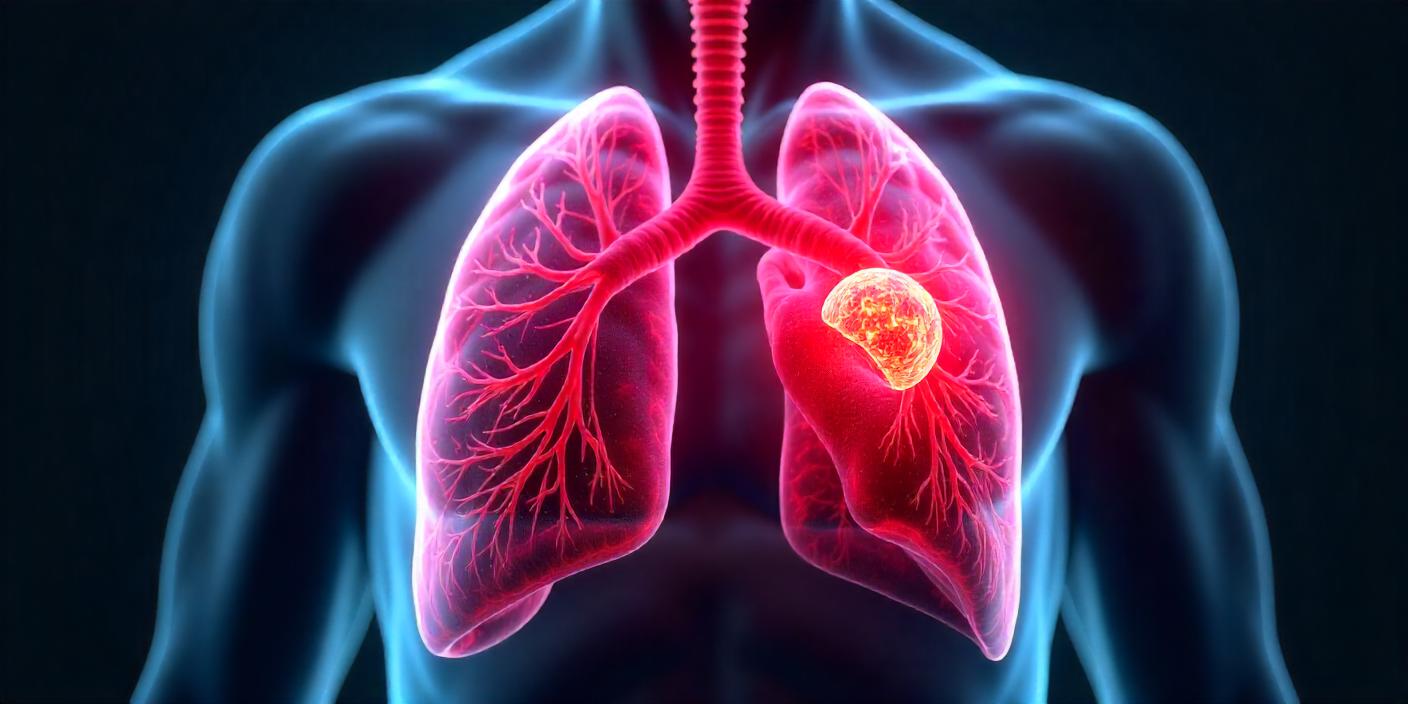
The Silent Phase: Why You Feel Nothing
The lungs have very few pain-sensing nerve endings. A tumor can grow inside the lung tissue for a long time without triggering any alarm signal . This is not a rare exception. It is the norm. The CDC states plainly that most people with lung cancer do not have symptoms until the cancer is advanced . Mayo Clinic oncologist Aaron Mansfield put it more bluntly in a 2022 interview: by the time a patient is diagnosed, the cancer has already spread about 80 percent of the time .
That statistic is the reason lung cancer remains the leading cause of cancer death in the United States. Not because it is uniquely aggressive in every case, but because it is uniquely quiet. A tumor in the central airway near a large bronchus may cause a cough or blood earlier because it irritates the airway. A tumor in the outer part of the lung can grow to several centimeters before it presses on anything that produces a symptom.
This is also why screening exists. A yearly low-dose CT scan for people at high risk, generally those aged 50 to 80 with a significant smoking history, can find cancer when it is small and far more treatable. Waiting for symptoms is waiting too long. That sentence is not scare tactics. It is the clinical consensus.
The First Symptoms That Actually Bring People In
When symptoms do arrive, they are rarely dramatic. They are the kind of thing you explain away. A cough that lingers after a cold and does not quite go back to normal. Getting winded on stairs you used to climb without thinking. A chest infection that clears with antibiotics and then comes back a few weeks later.
The NHS draws a clear line: see a doctor if you have had a cough for longer than three weeks, or if you have any other symptom that concerns you. That three-week threshold is not arbitrary. It separates the ordinary respiratory infections that resolve from the persistent changes that warrant investigation.
The symptoms that should send you to a doctor quickly, not urgently but soon, include a new cough that does not go away, coughing up blood, even a small amount, chest pain that worsens with deep breathing or coughing, shortness of breath that is new or getting worse, hoarseness that persists, unexplained weight loss, and fatigue that does not improve with rest. Coughing up blood is the one that should prompt an urgent call. It does not mean you have cancer. It means you need to find out why it is happening without delay.
Some symptoms appear only when the cancer has spread. Bone pain, particularly in the back or hips. Headaches or seizures if it reaches the brain. Swelling in the face or neck if a tumor presses on the superior vena cava, the large vein that carries blood from the upper body to the heart. These are late signs, and their appearance is the consequence of that silent phase.
The Diagnosis Sequence: What Happens After the First Scan
You go to the doctor with a cough that will not quit. The doctor listens to your chest, asks about your history, and orders a chest X-ray. The X-ray shows something. Maybe a shadow. Maybe a nodule. Maybe nothing conclusive.
The next step is usually a CT scan, which gives a more detailed picture of the lungs and surrounding structures. If the CT shows something suspicious, the only way to know for certain is a biopsy. A sample of tissue or fluid is taken, either through a bronchoscopy (a tube passed down the airway), a needle through the chest wall, or surgery. A pathologist examines the sample under a microscope to confirm whether cancer cells are present and, if they are, what type of lung cancer it is .
This is where the process becomes more specific. Lung cancer is not one disease. The two main categories are non-small cell lung cancer, which accounts for the majority of cases, and small cell lung cancer, which is less common but grows and spreads faster. The distinction matters because the treatment paths are entirely different.
Molecular testing comes next for many patients. The pathologist tests the tumor tissue for specific genetic mutations. The most common in non-small cell lung cancer is an EGFR mutation, but ALK, BRAF V600E, and others are also identified and targeted. This step is not academic. It determines whether a patient can take a daily pill that shrinks the tumor instead of receiving intravenous chemotherapy. A Cleveland Clinic lung cancer nurse described patients with EGFR mutations who started targeted therapy and reported feeling better within five days . That is not a miracle. That is biology meeting pharmacology.
Staging: The Language That Determines Everything
Staging is how doctors describe how far the cancer has gone. It uses the TNM system: T for the size and reach of the primary tumor, N for whether it has entered nearby lymph nodes, and M for whether it has metastasized to distant organs . The stage, usually expressed as a number from 0 to IV, determines the treatment options and the prognosis.
Stage I means the tumor is confined to the lung and is small enough to be removed surgically. Stage IV means the cancer has spread to the other lung, the fluid around the lungs or heart, or distant organs. For small cell lung cancer, doctors use a simpler split: limited stage, meaning the cancer is confined to one side of the chest and can be treated with a single radiation field, and extensive stage, meaning it has spread beyond that . Only about one in three people with small cell lung cancer are diagnosed at the limited stage. The rest already have extensive disease .
The stage is not a verdict. It is a map. It tells the treatment team which roads are open.
What Treatment Actually Looks Like
For early-stage non-small cell lung cancer, surgery is often the first move. The goal is to remove the tumor while preserving as much healthy lung tissue as possible. After surgery, some patients receive adjuvant chemotherapy or targeted therapy to reduce the risk of recurrence. For patients with an EGFR mutation and early-stage disease, the standard is surgery followed by indefinite oral targeted therapy with osimertinib, a shift from the older three-year limit .
For locally advanced disease that has spread to nearby lymph nodes but not beyond the chest, the approach is usually a combination of chemotherapy and radiation, sometimes followed by immunotherapy. For metastatic disease, the treatment depends entirely on the molecular profile. Immunotherapy drugs that help the immune system recognize and attack cancer cells have become standard for many patients. Targeted therapies exist for specific mutations. Chemotherapy remains an option when neither applies.
The experience of treatment has changed more than most people realize. A Cleveland Clinic oncology nurse who has worked in lung cancer for years said she does not remember hearing about these targeted therapies a decade ago. Now she sees patients with metastatic lung cancer who have been on oral targeted therapy for eight or ten years, living their lives, coming in every three months for scans . That is not the outcome for everyone. But it is a real outcome that did not exist in the same way fifteen years ago.
The Part Nobody Warns You About: Muscle and Weight
One thing that happens to many people with lung cancer, and which symptom lists rarely mention, is muscle wasting. Cancer cachexia is a complex metabolic change that causes loss of muscle and fat, often before the person has even started treatment. It is not simply a matter of not eating enough. The tumor releases substances that alter how the body uses energy, and the immune response contributes to the breakdown of muscle tissue.
This matters because muscle loss affects tolerance to treatment, recovery from surgery, and overall survival. It is also one of the reasons nutritional support and, where possible, resistance activity are part of comprehensive cancer care, not optional extras. If you or someone you love is going through treatment and losing weight rapidly, that is a clinical issue to raise with the oncology team, not a cosmetic one.
The Emotional Reality: Guilt, Stigma, and the Question Nobody Asks
Lung cancer carries a stigma that other cancers do not. The first question many people ask upon diagnosis, silently or aloud, is whether the person smoked. That question is both irrelevant and cruel. Up to 20 percent of lung cancers occur in people who never smoked, according to Mayo Clinic . The Lung Cancer Research Foundation notes that about one in five women diagnosed have never smoked . The CDC confirms that symptoms are the same regardless of smoking history, and that anyone with persistent symptoms deserves evaluation .
The guilt cuts both ways. Smokers who develop lung cancer often feel they brought it on themselves. Non-smokers feel a different kind of confusion, a sense that the diagnosis does not fit. Neither response helps. The biology does not care about fault. What matters is finding the cancer, staging it accurately, and treating it with the right approach.
A Cleveland Clinic nurse who works with lung cancer patients every day described her role in simpler terms: she wants patients to know she is their advocate, that they can count on her, and that the hourglass is not necessarily flipped the moment they hear the word cancer . That is not false optimism. It is the reality of a disease that has more treatment options now than at any point in its history.
Frequently Asked Questions
What happens when a person has lung cancer in the early stages?
Early-stage lung cancer usually causes no symptoms. It is often found by accident on a scan ordered for another reason, or through screening for high-risk patients. When it is caught early, surgery can be curative, and five-year survival for localized non-small cell lung cancer is significantly higher than for advanced disease .
How long can you have lung cancer without knowing?
Months to years. Because the lungs have few pain receptors, a tumor can grow quietly until it is large enough to press on an airway, invade nearby structures, or spread to another part of the body. This is why most lung cancers are diagnosed at an advanced stage .
What is the first symptom of lung cancer usually?
There is no single first symptom. A persistent cough that does not resolve is common, as is shortness of breath with exertion that is new. Some people notice blood in their sputum. Others have no symptoms at all and are diagnosed after a routine scan .
Does coughing up blood always mean lung cancer?
No. Blood in the sputum can come from a severe respiratory infection, bronchitis, or other causes. But it should always be evaluated promptly. The NHS advises seeking urgent medical attention if you cough up blood .
Can lung cancer be cured?
Early-stage non-small cell lung cancer can be cured with surgery in many cases. Advanced lung cancer is usually not curable, but it is increasingly treatable. Targeted therapies and immunotherapy have extended survival for many patients with metastatic disease, sometimes for years .
What is the difference between small cell and non-small cell lung cancer?
Non-small cell lung cancer is the more common type and generally grows more slowly. Small cell lung cancer is less common, grows faster, and is more likely to have spread by the time it is diagnosed. The treatment approaches are different: surgery and targeted therapy play a larger role in non-small cell, while chemotherapy and radiation are central to small cell treatment .
What This Means for You
If you are reading this because you or someone you love has been diagnosed, the sequence I have laid out is the one you are living through. The silence, the scan, the biopsy, the wait for staging, the molecular results, the treatment plan. It is a lot. It moves faster than you are ready for and slower than you want.
The single most useful thing you can do is ask about molecular testing. Not every hospital does it automatically for every patient. If you have non-small cell lung cancer, knowing whether your tumor has a targetable mutation like EGFR, ALK, or BRAF can change your treatment from intravenous chemotherapy to a daily pill. That conversation is worth having, and it is worth having early.
If you are reading this because you have a cough that will not quit, or because something feels different in your chest, the useful thing is simpler. Three weeks. If it has been three weeks, make the appointment. The odds are overwhelming that it is nothing serious. But the cost of checking is a morning. The cost of waiting is measured in stages.
For more helpful insights, visit healnurtura
We have recently launched a free tool to analyze your skin: HealNurtura Skin Analyzer
We’d love if you try and test it and share your experience through email contact@healnurtura.com or in the comment section below!