
10 Signs Your Skin Barrier Is Damaged (And What to Do)
Your skin started reacting to a moisturizer you’ve used for two years without issue. That’s usually the moment people start searching for the signs your skin barrier is damaged, and it’s also usually the first real sign something’s off, not the last.
Most lists on this topic repeat the same eight symptoms in slightly different words, then hand you a generic “use gentler products” wrap-up and call it a day.
This one goes further. It separates the early, easy-to-miss signs from the ones that mean you’ve waited too long, and it tells you what to actually change at each stage, based on what a Cleveland Clinic dermatologist and the real physiology behind barrier damage say, not a repackaged checklist.
What Are the Signs Your Skin Barrier Is Damaged?
The clearest signs your skin barrier is damaged are stinging when you apply products that never bothered you before, persistent tightness that moisturizer doesn’t relieve, unexplained redness, rough or uneven texture, and breakouts that resist your usual treatment. If several of these show up together, your barrier, not a new allergy or a bad skincare habit on its own, is usually the actual problem.
Here’s each of these signs your skin barrier is damaged in more depth, and what it’s actually telling you about what’s happening underneath.

The 10 Signs Your Skin Barrier Is Damaged
1. Products sting or burn that never used to
This is often the first sign your skin barrier is damaged, and the easiest one to write off. A cleanser or serum you’ve used for months suddenly stings on contact.
Dermatologist Dr. Melissa Piliang of Cleveland Clinic explains that this happens because your skin barrier’s whole job is keeping irritants out, and once it’s compromised, that gatekeeping function weakens.
Ingredients that used to sit harmlessly on the surface start reaching nerve endings they shouldn’t be able to reach at all.
2. Tightness and dryness that moisturizer doesn’t fix
Normal dryness responds to moisturizer within minutes.
Barrier-related dryness doesn’t, or it fades and comes right back within the hour.
This points to elevated transepidermal water loss, meaning your skin is losing water faster than any topical product can replace it, since the physical structure meant to slow that loss just isn’t doing its job anymore.
3. Redness with no obvious cause
Flushing or visible redness that shows up without sun exposure, a new product, or any known trigger is one of the more alarming signs your skin barrier is damaged, and it usually means your skin’s immune response has been activated.
A damaged barrier lets more irritants through, and your skin reacts to that increased traffic with inflammation, even when nothing dramatic has actually changed in your routine.
4. Rough or bumpy texture you can feel before you can see it
Run your fingers across your cheek, and it feels like sandpaper, even though nothing looks obviously wrong in the mirror yet.
This texture change reflects disrupted cell turnover. Dead skin cells aren’t shedding on their normal schedule, and the lipids that should smooth the surface between them aren’t being produced at healthy levels anymore.
5. Breakouts that get worse the more you treat them
If your usual acne products are making things worse instead of better, that’s one of the more counterintuitive signs your skin barrier is damaged, and it’s worth paying real attention to.
A compromised barrier can’t tolerate the same concentration of active ingredients it used to handle just fine, and continuing to apply the same treatment often deepens the irritation rather than clearing it up.
6. Oilier skin than usual, especially if you’re also dealing with dryness
This one confuses people the most, since oily and damaged sound like they should contradict each other.
Skin can produce more sebum specifically to compensate for excessive water loss elsewhere, meaning you can end up with an oily surface sitting on top of genuinely dehydrated, barrier-compromised skin underneath.
7. Itching without a visible rash
Itchiness with nothing to actually see gets attributed to allergies, weather, or laundry detergent long before anyone thinks to consider the skin barrier.
If it started around the same time as a new active ingredient, a stronger acid, or a switch in cleanser, that timing is worth connecting.
8. A product you’ve used safely for months suddenly causes a reaction
This is different from a first-time reaction to something brand new, and it’s one of the signs your skin barrier is damaged that people misread most often.
When a long-trusted product suddenly causes redness, stinging, or breakouts, your barrier’s tolerance threshold has dropped, not the product’s formula.
It’s one of the clearest tells that something systemic shifted in how your skin is functioning.
9. Cuts, blemishes, or irritation take longer than usual to calm down
A pimple that would normally settle in two or three days lingers for a week instead. A small nick from shaving stays inflamed longer than it should.
Barrier damage slows your skin’s regenerative capacity, so recovery from minor, everyday skin trauma just takes measurably longer than it used to.
10. Skin looks dull and tired despite normal sleep and diet
When hydration retention drops at a cellular level, one of the last signs your skin barrier is damaged to show up is a loss of the light-reflecting smoothness that reads as “glow.”
If your sleep, water intake, and diet haven’t changed but your skin looks flat and tired anyway, a struggling barrier is a more likely explanation than anything you’re doing wrong lifestyle-wise.
Ingredients That Make Barrier Damage Worse If You Keep Using Them
A handful of ingredients show up constantly in stories about how barrier damage actually started, and recognizing them matters just as much as recognizing the symptoms themselves.
- High-percentage retinoids used nightly without any break, especially when started at a strength above what your skin had actually built tolerance for
- Multiple acids layered together, glycolic, salicylic, and lactic acid stacked in the same routine rather than rotated
- Physical scrubs with rough, uneven particles, including the walnut shell and apricot pit scrubs that create microscopic tears rather than smoothing anything
- Alkaline bar soaps, which push skin’s naturally acidic pH upward and disable the enzymes responsible for producing barrier lipids
- Alcohol-heavy toners, particularly denatured alcohol sitting high on an ingredient list, used daily over months
None of these are automatically harmful on their own. The damage tends to come from frequency and stacking, using several of them together, every day, without any gentler days built into the rotation.
How to Tell the Difference Between Barrier Damage and Just Sensitive Skin
This distinction trips a lot of people up, since the two can look nearly identical on the surface.
Naturally sensitive skin reacts consistently to the same specific triggers over time- fragrance, certain preservatives, particular acids- and that reactivity has usually been around for years already.
Skin barrier damage shows up as a change, meaning products you tolerated fine last month suddenly don’t sit well, and the reactivity tends to widen out rather than staying limited to one or two known irritants.
If you’ve always had reactive skin and nothing’s changed, you’re probably dealing with baseline sensitivity, not new damage.
If your tolerance has visibly dropped over the past few weeks or months, that shift itself is one of the more reliable signs your skin barrier is damaged, rather than simply being sensitive by nature.
What’s Actually Causing This
Barrier damage rarely comes from one dramatic mistake, and the signs your skin barrier is damaged usually build up gradually rather than showing up overnight. Dr. Piliang points to a specific, common combination: harsh cleansers or soaps, over-exfoliating, cleansing with water that’s too hot, and skipping moisturizer altogether. Add in layering too many active ingredients at once, particularly acids and retinoids stacked with zero recovery time between them, and you’ve got the most common real-world path to a compromised barrier.
Underlying skin conditions play a role too. Atopic dermatitis, rosacea, psoriasis, and adult acne are all medically associated with impaired barrier function, which means if you’re managing one of these conditions and noticing several signs above, working with a dermatologist matters a lot more than adjusting your routine solo.
What to Do Depending on How Bad It’s Gotten
If you’re only seeing one or two of the signs your skin barrier is damaged- mild stinging or occasional tightness- start by cutting back rather than adding anything new. Drop any acids, retinoids, or physical scrubs for a week or two and switch to a soap-free, fragrance-free cleanser with lukewarm water instead of hot.
If you’re seeing four or more of these signs your skin barrier is damaged together, redness, rough texture, breakouts, and delayed healing, it’s worth pausing your entire active-ingredient routine, not just whatever you added most recently. Rebuild around three things: a gentle cleanser, a moisturizer containing ceramides, fatty acids, and cholesterol, and daily sunscreen. Nothing else until your skin actually calms down.
If none of this improves things after a few weeks, or you suspect an underlying condition like rosacea or eczema is driving it, that’s the point to see a dermatologist rather than keep guessing at home.
Where People Usually Get the Timeline Wrong
Part of why barrier damage sticks around longer than expected comes down to a pattern nobody really warns you about. Symptoms often improve slightly within the first few days of a gentler routine, just enough to feel like it’s working, and then plateau. That plateau is normal, not a sign your new routine has failed. The visible improvement people expect by week two is actually closer to the halfway point of a longer process, not the finish line, and going back to stronger products the moment things look a little better is the single most common reason people end up back at square one within a month.
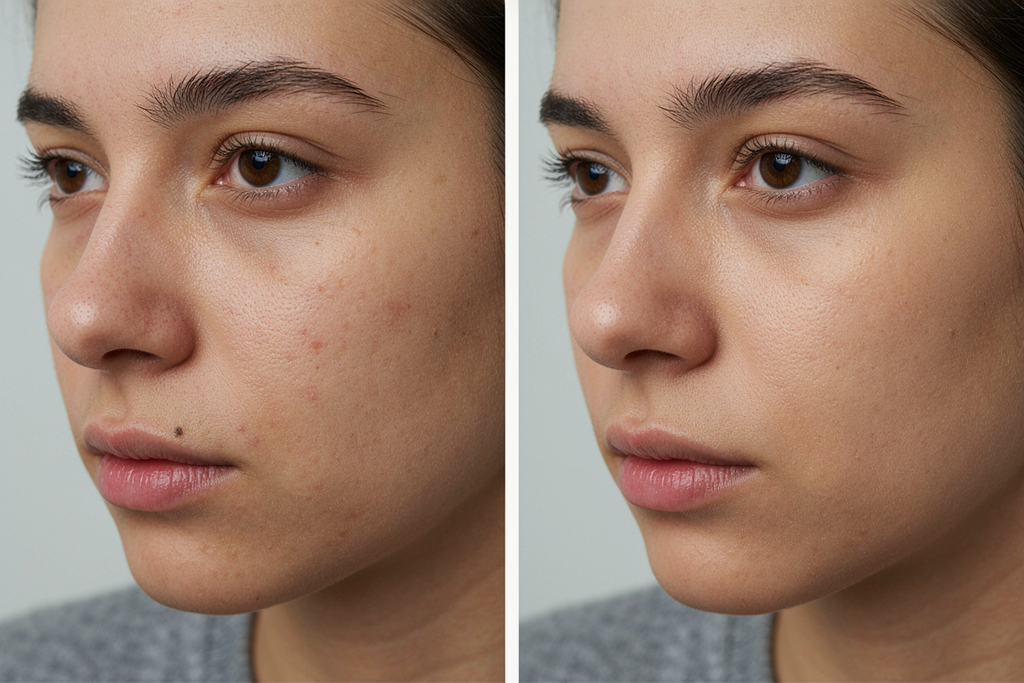
Tracking your skin with weekly photos in the same lighting, rather than relying on how it feels day to day, makes this plateau far less discouraging, since you can actually see gradual change that’s easy to miss in the mirror each morning.
How Long Recovery Actually Takes
This is the part most people underestimate. Dr. Piliang notes that visible improvement typically takes three to four months of consistent, gentle care, not the one to two weeks a lot of product marketing implies. Skin that took months of harsh treatment to damage doesn’t reset in a week just because you switched cleansers.
Age affects this timeline too. Younger skin can bounce back from a rough day, hot showers, or a harsh product within hours, while skin in your 50s, 60s, and beyond regenerates more slowly and needs a longer, more patient recovery window after the same kind of damage.
Frequently Asked Questions
Can a damaged skin barrier heal on its own without changing products?
Rarely completely, since the habits or products causing the damage usually need to change first. Simplifying your routine and removing whatever’s triggering the irritation is typically necessary alongside, not instead of, giving your skin time.
Is it normal for skin to sting when applying sunscreen if my barrier is damaged?
Yes, this is pretty common, particularly with chemical sunscreens rather than mineral ones. If sunscreen stings, switching to a mineral formula with zinc oxide or titanium dioxide is usually better tolerated while your barrier recovers.
How do I know if it’s my skin barrier or a new allergy?
A true allergic reaction tends to happen fast, with one specific product, and stays consistent. Signs of a damaged skin barrier usually involve multiple products starting to bother you gradually over weeks, along with other signals like dryness or rough texture showing up around the same time.
Should I stop using all active ingredients if I suspect barrier damage?
Yes, temporarily. Pause retinoids, exfoliating acids, and high-strength vitamin C until your barrier shows clear signs of recovery, then reintroduce them one at a time, slowly, rather than all at once.
Can barrier damage affect skin tone or cause dark spots?
Indirectly, yes. Inflammation from a compromised barrier can trigger post-inflammatory hyperpigmentation, particularly in medium to deep skin tones, which is one more reason calming active irritation matters before it leaves a longer-lasting mark behind.
Reading Your Skin Correctly
The ten signs your skin barrier is damaged rarely show up alone. Most people notice two or three at once, stinging paired with tightness, or breakouts alongside dullness, and that clustering is itself a signal worth trusting over any single symptom in isolation. Simplify first, give it real time, and escalate to a dermatologist if a few weeks of gentle care doesn’t move the needle at all.
Want the deeper explanation of what your barrier is actually made of and why it fails the way it does? Our guide to what the skin barrier is walks through the full structure behind everything listed here.
Pingback: What Is the Skin Barrier? Function, Structure & Why It Matters