Beta-Glucan: The Rising Ingredient for Skin Barrier Repair
Beta-glucan has been sitting in ingredient lists for years without anyone noticing. It is not retinol. It will not resurface your skin overnight. What it does is quieter and, for a specific group of people, more useful. If your skin stings when you apply anything, if retinol leaves you red for days, if your barrier feels like it has given up, beta-glucan is the ingredient worth understanding. This guide explains what it actually does, separates the yeast-derived from the oat-derived versions, and names three products under $50 that are worth your money.
What does beta-glucan actually do for your skin barrier?
Beta-glucan is a polysaccharide that acts as both a humectant and a film-former. It draws water into the skin and creates a lightweight protective layer that reduces transepidermal water loss. In laboratory studies on reconstructed human skin, carboxymethyl beta-glucan supported wound repair, lowered water loss, and increased tight junction proteins that hold the barrier together . Human trial data remains thin. Expect comfort and hydration, not transformation.
The Barrier Ingredient That Does Not Need Hype
What beta-glucan is (and is not)
Beta-glucan is a sugar chain found in the cell walls of oats, baker’s yeast, and certain mushrooms . In skincare, formulators use a water-soluble derivative called carboxymethyl beta-glucan so it blends into serums and essences without feeling tacky. The ingredient interacts with a skin receptor called Dectin-1, which influences how skin cells behave during repair .
Here is what beta-glucan is not. It is not an exfoliant. It is not a collagen stimulator. It will not fade dark spots or unclog pores. If you are looking for those outcomes, you need different ingredients. Beta-glucan is a support player. It makes the rest of your routine tolerable.
Yeast-derived versus oat-derived: the distinction competitors miss
Most articles treat beta-glucan as one ingredient. It is not. The source changes the chemistry and the evidence base.
Yeast-derived beta-glucan, particularly the carboxymethylated form (CM-glucan), has the most clinical research behind it. Mibelle Biochemistry, the Swiss manufacturer that pioneered the purification process, sells CM-Glucan Granulate at a recommended usage rate of 0.02 to 0.1 percent . Their in vitro data shows inhibition of CGRP release and calcium influx in sensory neurons, which translates to a soothing effect on reactive skin. In vivo data reports protection against dehydration after stress and accelerated skin regeneration .
Oat-derived beta-glucan carries the reputation of colloidal oatmeal without the texture. Dr. Jane Yoo, a board-certified dermatologist at Mount Sinai, notes that beta-glucan is “essentially a more concentrated, cosmetically elegant delivery of that same barrier-supportive mechanism” that makes oat products work for eczema .
The practical difference: if you want the ingredient with the most published mechanism data, look for carboxymethyl beta-glucan on the ingredient list. If you want the oat connection and a lighter texture, oat-derived works. Both are gentle. Neither will transform your skin in a week.
How Beta-Glucan Repairs a Compromised Barrier
The humectant-plus-film mechanism
Your barrier has two jobs. It keeps water in and irritants out. When it fails, you feel tightness, stinging, and flaking. Beta-glucan addresses both jobs through two simultaneous actions.
As a humectant, it binds water molecules and holds them against the skin surface. As a film-former, it creates a breathable layer that slows water loss through the epidermis . This dual action is why beta-glucan appears in post-procedural products and formulas for sensitive skin. Dr. David Jack, quoted in Vogue, describes it as “a very calm, very competent first responder that puts out microscopic fires before they turn into visible redness or irritation” .
What the lab data shows versus what human trials confirm
The honest answer is that beta-glucan has stronger laboratory evidence than human trial evidence.
In reconstructed human skin models, carboxymethyl beta-glucan lowered transepidermal water loss and raised tight junction protein levels . Those are meaningful mechanistic signals. They tell us the ingredient does something measurable at the cellular level.
Human data is thinner. Vogue quotes dermatologists who recommend it for rosacea, eczema, and contact dermatitis based on clinical experience . Mibelle cites clinical studies on “very sensitive or stressed skin” for its CM-Glucan ingredient . But large, independent, controlled trials on finished cosmetic products are not available in the public literature. Superpower’s guide is refreshingly direct about this: “Treat beta-glucan as a helpful supporting ingredient, and set expectations for gentle hydration and comfort rather than visible transformation” .
That is not a reason to skip it. It is a reason to buy it for the right reasons.
If you want to see the full guide on Skin Barrier, must visit our website .
Three Beta-Glucan Products You Can Actually Buy in the US
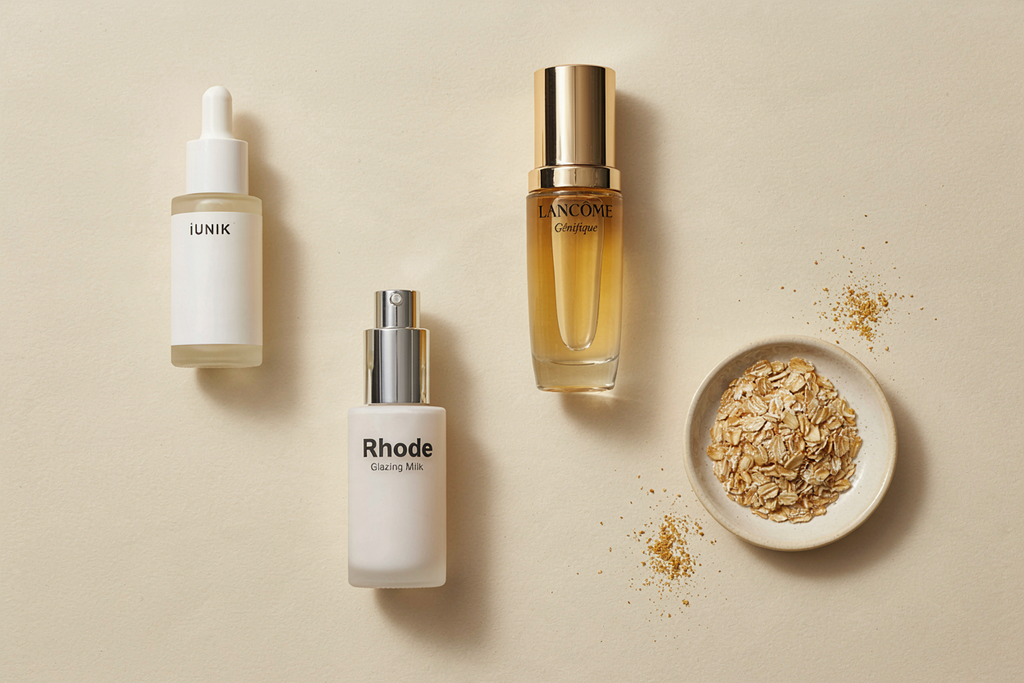
iUNIK Beta-Glucan Power Moisture Serum
iUNIK’s serum costs $42 for a 1.69-ounce set at Ulta, and the formula lists beta-glucan at 160,000 parts per billion alongside glycerin, sodium PCA, and adenosine . The ingredient list is ten items long. No fragrance. No essential oils. Fungal acne safe.
This is the product to buy if you want to test whether beta-glucan agrees with your skin without spending $100. The concentration is disclosed, which is rare. Most brands bury beta-glucan at the bottom of the ingredient list and call it a hero ingredient. iUNIK puts the number on the label.
Lancôme Génifique Ultimate
Lancôme’s serum costs $67.50 for the 1.69-ounce refillable size on Amazon, and it pairs beta-glucan with hyaluronic acid, vitamin C, and licorice extract . The brand claims 93 percent better barrier repair in one hour based on internal testing. That number comes from Lancôme’s own labs, not an independent study, so treat it with appropriate skepticism.
What makes this product worth mentioning is the formulation context. Beta-glucan sits alongside proven hydrators and antioxidants rather than carrying the formula alone. If you want a single product that addresses barrier support and brightening simultaneously, this does it. The price is the barrier to entry, not the ingredient.
Rhode Glazing Milk — the barrier-prep step
Rhode’s Glazing Milk is not a beta-glucan serum. It is a barrier-prep essence that includes beta-glucan alongside ceramides and a mineral blend . Hailey Bieber told Vogue she uses it with tretinoin to combat irritation . The product is available only at rhodeskin.com, not Sephora or Ulta.
The reason it belongs here: it demonstrates the correct use case for beta-glucan. It is not a treatment. It is a preparatory layer that makes stronger actives more tolerable. If you use retinoids and struggle with the adjustment period, a beta-glucan essence applied before the retinoid is a sensible buffer.
Who Should Use Beta-Glucan (and Who Can Skip It)
The skin types that benefit most
Beta-glucan suits dry, dehydrated, and reactive skin. Dr. Derrick Phillips tells Vogue it is “especially useful for skin that is easily irritated or prone to redness, including conditions such as rosacea, eczema and contact dermatitis” . Dr. Jane Yoo recommends it for eczema-prone skin, post-procedure skin, and anyone adjusting to retinoids .
If your skin feels tight after cleansing, stings when you apply products, or flushes easily, beta-glucan is a reasonable addition. It layers with everything. It has no known conflicts.
When beta-glucan is not enough
Beta-glucan will not fix acne. It will not fade melasma. It will not replace a prescription for eczema or rosacea. If your barrier is compromised to the point of oozing, cracking, or persistent rash, you need a dermatologist, not a serum.
It is also not a substitute for ceramides. Ceramides physically replace the lipids missing from a damaged barrier. Beta-glucan hydrates and protects. Dr. Yoo puts it plainly: “Ceramides physically replace lipid mortar in the skin barrier, while beta-glucan primarily hydrates and forms a protective film. Many well-formulated K-beauty moisturizers include both, and there’s no conflict in using them together” .
How to Layer Beta-Glucan With Retinol, Vitamin C, and Acids
The buffer strategy
Apply beta-glucan before the irritating active, not after. The film it forms creates a slightly buffered surface that reduces the intensity of the active’s penetration. This is the same principle behind sandwiching retinol between moisturizers, but beta-glucan does it with a lighter texture.
Dr. Phillips explains the mechanism to Vogue: “By maintaining skin comfort and improving barrier function, beta-glucan actually allows for you to use these ingredients more consistently” . Consistency matters more than intensity with retinoids. If beta-glucan helps you use your retinol four nights a week instead of two, it has done its job.
What not to mix it with
There are no known ingredient conflicts with beta-glucan. It layers with vitamin C, niacinamide, salicylic acid, glycolic acid, and benzoyl peroxide without degrading. The only caution is practical: if your routine already has five hydrating layers, adding a sixth will not improve your skin. More steps do not equal more results. Beta-glucan earns its place when it replaces a product that was irritating you, not when it stacks on top of an already crowded routine.
Frequently Asked Questions
Is beta-glucan better than hyaluronic acid?
Neither is better. They work differently. Hyaluronic acid draws water into the skin quickly and can plump fine lines within hours. Beta-glucan holds water more gradually and adds a film-forming layer that reduces water loss over time. Dr. Jack tells Vogue the combination works better than either alone: “Hyaluronic acid hydrates immediately, while beta-glucan reinforces resilience and water retention over time” . Use both if your skin is dehydrated.
Can beta-glucan cause breakouts?
Beta-glucan is generally considered non-comedogenic and well-tolerated, including by oily and acne-prone skin . The iUNIK serum is marketed as fungal acne safe . If a product containing beta-glucan breaks you out, the culprit is more likely a base ingredient like a heavy oil or ester, not the beta-glucan itself.
Is beta-glucan safe for eczema?
It can be a helpful supportive ingredient for eczema-prone skin, but it should complement prescription treatment, not replace it . The oat-derived form shares the same barrier-supportive mechanism as colloidal oatmeal, which dermatologists have recommended for eczema for decades. If your eczema is flaring, see your dermatologist first.
How long does beta-glucan take to work?
Hydration benefits are immediate. Barrier support builds over two to four weeks of consistent use. The ingredient does not produce dramatic visible change, so do not expect a before-and-after transformation. The sign that it is working is negative: your skin stops stinging, your retinol becomes tolerable, your moisturizer feels sufficient. That is the outcome beta-glucan delivers.
The Bottom Line
Beta-glucan is not the next retinol. It is the ingredient that makes retinol usable for people who cannot tolerate it. Buy it if your barrier is reactive, if you are adjusting to actives, or if you want a hydrating layer that does more than water. The iUNIK serum at $42 is the lowest-risk way to test it. The Lancôme serum is the option with the most clinical data behind the finished formula. Rhode’s Glazing Milk is the barrier-prep step for retinoid users . Pick based on what your skin is doing, not what the marketing claims.
Medical disclaimer: This article is research-based and drawn from peer-reviewed laboratory studies, manufacturer clinical data, and board-certified dermatologist commentary published in Vogue and on Dr. Jane Yoo’s clinical site. It is not medical advice. If you have a diagnosed skin condition, consult a dermatologist before changing your routine.