
Best Skin Barrier Repair Creams & Moisturizers of 2026
Not every cream labeled “barrier repair” actually contains enough of what it’s named after to do anything.
Ceramides work, but only at the right concentration and positioned high enough on the ingredient list to matter, and a lot of drugstore shelves are stocked with products that list ceramides eighth or ninth, after water, glycerin, and a handful of thickeners.
That’s the gap between marketing language and formulation, and it’s why this list only includes creams where the actual ingredient deck backs up the claim on the front label.
I haven’t personally tested every product below on my own skin, so I won’t pretend otherwise. What follows is drawn from published clinical data where it exists, verified ingredient lists, and current US retail pricing at Sephora, Ulta, and Amazon, checked directly rather than copied from another roundup.
What’s the Best Skin Barrier Repair Cream Right Now?
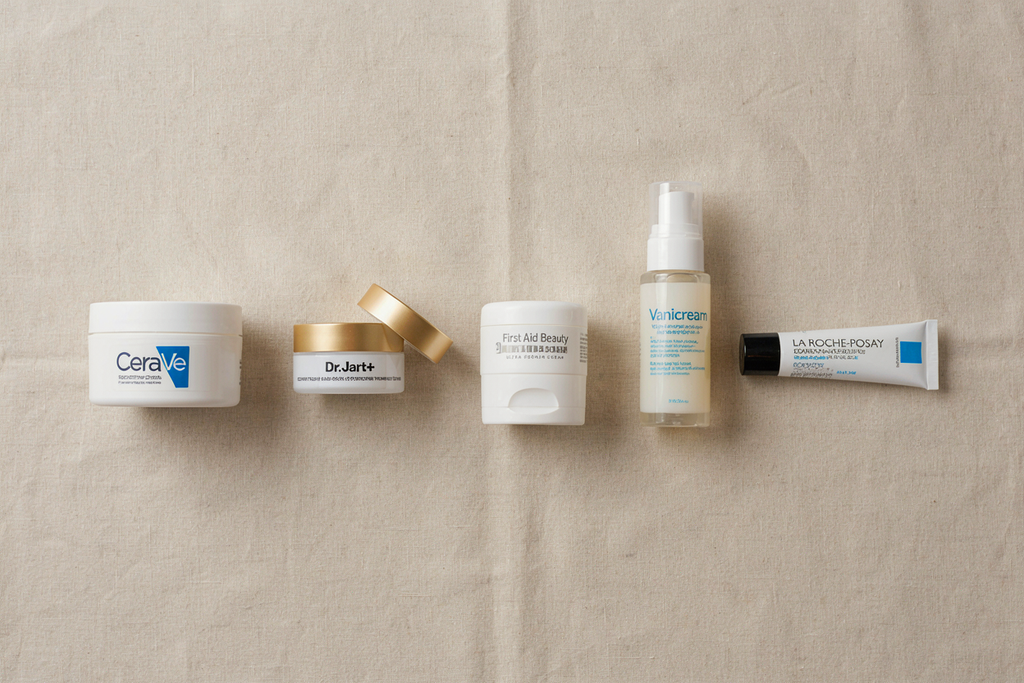
CeraVe Moisturizing Cream is the best overall pick for most people, containing three ceramides (1, 3, and 6-II) at a price under $20.
Dr. Jart+ Ceramidin Cream is the strongest option for genuinely compromised skin, backed by a brand-conducted clinical study on 31 women showing measurable barrier strength improvement after four weeks.
For sensitive or eczema-prone skin specifically, Vanicream’s fragrance-free formula avoids the largest category of triggering ingredients entirely.
Five products made this list. Here’s what separates them, and which situation actually calls for each one.
CeraVe Moisturizing Cream — Best Overall
CeraVe built its entire brand identity around a specific three-ceramide blend, ceramides 1, 3, and 6-II, developed with input from dermatologists and consistently positioned near the top of the ingredient list rather than buried after fillers.
At roughly $20 for a 19-ounce jar at Ulta or Amazon, the cost per use is lower than almost anything else on this list.
The formula also includes hyaluronic acid for additional water retention and comes in a jar large enough to last most people two to three months of twice-daily use on the face and body combined. This is the barrier repair cream I’d point a first-time buyer toward before recommending anything more expensive, since the ceramide science behind it is genuinely solid and the price removes any reason to hesitate.
You can buy it at a discounted price by clicking here
Dr. Jart+ Ceramidin Cream — Best for Compromised Skin
Dr. Jart+ formulates this one around five separate ceramide types, NP, NG, NS, AS, and AP, at a stated 2.3 percent concentration, paired with panthenol for additional moisture support. It runs $48 for 50ml at Sephora, making it the priciest entry here by a wide margin.
The price is justified by real testing data, with a caveat worth stating plainly. The brand’s own clinical trial, conducted on 31 women over four weeks, measured improved barrier strength and elasticity.
That’s brand-sponsored research, not an independent, peer-reviewed study, so treat the specific numbers with appropriate skepticism even though the underlying five-ceramide formulation is genuinely well-built.
If your skin has been through a rough stretch, recent over-exfoliation, harsh weather, or a reaction to another product, this is the barrier repair cream with the most concentrated ceramide payload on this list.
You can buy it by clicking here
First Aid Beauty Ultra Repair Cream — Best for Fast Absorption
This one takes a different formulation approach, building around colloidal oatmeal rather than leading with ceramides.
Colloidal oatmeal has a long, separately documented history for calming irritated skin, and the cream absorbs faster than the thicker, more occlusive options on this list, which matters if you don’t want a greasy layer sitting on your face before makeup or during the day.
Standard sizing runs around $38 at Sephora and Ulta, though it goes on sale often enough that checking current pricing before buying is worth the extra minute.
If you’ve found ceramide-heavy creams feel too rich or slow to sink in, this is the barrier repair cream built for a lighter, faster-absorbing experience without giving up the calming, anti-irritation angle entirely.
You can buy First Aid Beauty Ultra Repair Cream at a discounted price from Amazon
Vanicream Enhanced Moisturizer — Best for Sensitive and Eczema-Prone Skin
Vanicream built its reputation specifically around what it leaves out. No fragrance, no dyes, no formaldehyde releasers, no lanolin; the ingredient list here is short enough to read in ten seconds, which matters enormously if you’re dealing with skin that reacts to the added extras most other brands include.
The Enhanced Moisturizer variant, at $17.99 at Ulta, adds hyaluronic acid and ceramides on top of that stripped-back base formula. It’s the barrier repair cream dermatologists most often recommend specifically for eczema- and psoriasis-prone skin, precisely because there’s so little in the formula that could realistically trigger a reaction.
You can buy it at a discounted price by clicking here
La Roche-Posay Cicaplast Baume B5 — Best Multi-Purpose Option
Cicaplast Baume B5 isn’t marketed primarily as a facial moisturizer, and that’s part of what makes it useful.
Built around panthenol, the provitamin form of B5 with well-documented soothing and wound-support properties, it’s designed to work on cracked hands, irritated elbows, and compromised facial skin equally well.
At around $20 at Ulta or Amazon, it functions as a genuine multi-tasker rather than a single-purpose product, which is worth factoring in if you’d rather buy one tube that handles your face, your kids’ scraped knees, and your own dry hands than stock three separate products for three separate jobs.
You can buy La Roche-Posay Cicaplast Baume B5 at a discounted price from Amazon
Why Ceramide Ratio Matters More Than Ceramide Count
Counting how many ceramide types a product lists is a reasonable first filter, but it misses something dermatology researchers have pointed to for years.
Skin’s natural lipid barrier doesn’t just need ceramides present; it needs them roughly balanced with cholesterol and free fatty acids in something close to a one-to-one-to-one ratio for the barrier to function normally.
A cream loaded with ceramides but missing adequate cholesterol and fatty acids can still underperform a simpler formula that gets that ratio closer to right.
This is part of why CeraVe’s formula, built with dermatologist input specifically around that three-lipid balance, performs consistently well in practice despite listing fewer total ceramide variants than Dr. Jart+’s five-ceramide approach.
More ceramide types sound better on a label. Correct proportion relative to cholesterol and fatty acids is what the research actually points to as the deciding factor, and it’s rarely printed anywhere you can easily check without cross-referencing the full ingredient deck.
Who Shouldn’t Rely on a Cream Alone
A barrier repair cream is a maintenance and recovery tool, not a treatment for every cause of barrier dysfunction.
If your skin issues stem from diagnosed eczema, psoriasis, or rosacea, a cream can support the skin between flares, but it isn’t a substitute for whatever prescription treatment a dermatologist has already recommended.
Layering a barrier repair cream on top of active, weeping, or cracked skin without addressing the underlying trigger, whether that’s an allergen, a medication reaction, or an untreated condition, tends to mask symptoms temporarily rather than resolve them.
If you’ve tried a genuinely well-formulated option from this list consistently for a month with no improvement, that’s a reasonable point to involve a dermatologist rather than continuing to cycle through different creams hoping one works better than the last.
How These Five Actually Compare
Lining the numbers up side by side makes the tradeoffs clearer than descriptions alone:
- CeraVe Moisturizing Cream: roughly $20, three ceramides, largest jar size, best cost per use
- Dr. Jart+ Ceramidin Cream: $48, five ceramides at 2.3 percent, brand-tested on 31 women over four weeks
- First Aid Beauty Ultra Repair Cream: around $38, colloidal oatmeal base, fastest absorption
- Vanicream Enhanced Moisturizer: $17.99, ceramides plus hyaluronic acid, shortest fragrance-free ingredient list
- La Roche-Posay Cicaplast Baume B5: around $20, panthenol-based, works on face and body both
None of these is objectively the best barrier repair cream for every situation. The right one depends on your specific skin, your budget, and whether you’re treating an active flare-up or maintaining skin that’s already reasonably healthy.
Matching a Cream to Your Actual Situation
If your barrier feels generally fine and you just want reliable daily maintenance, CeraVe is the default that doesn’t require overthinking.
If you’re coming out of an active flare-up, redness, stinging, visible damage from over-exfoliation, Dr. Jart+’s concentrated ceramide payload makes the higher price easier to justify short-term. If fragrance or a long ingredient list has burned you before, Vanicream removes that risk almost entirely.
If you want a lighter texture that won’t sit heavy under makeup, First Aid Beauty absorbs faster than the ceramide-forward options. And if you’d rather buy one multi-purpose tube than separate products for face and body, Cicaplast Baume B5 covers both.
What to Check on Any Barrier Repair Cream Before You Buy
A few label details separate a genuinely effective barrier repair cream from one riding on the term without the formulation to back it up.
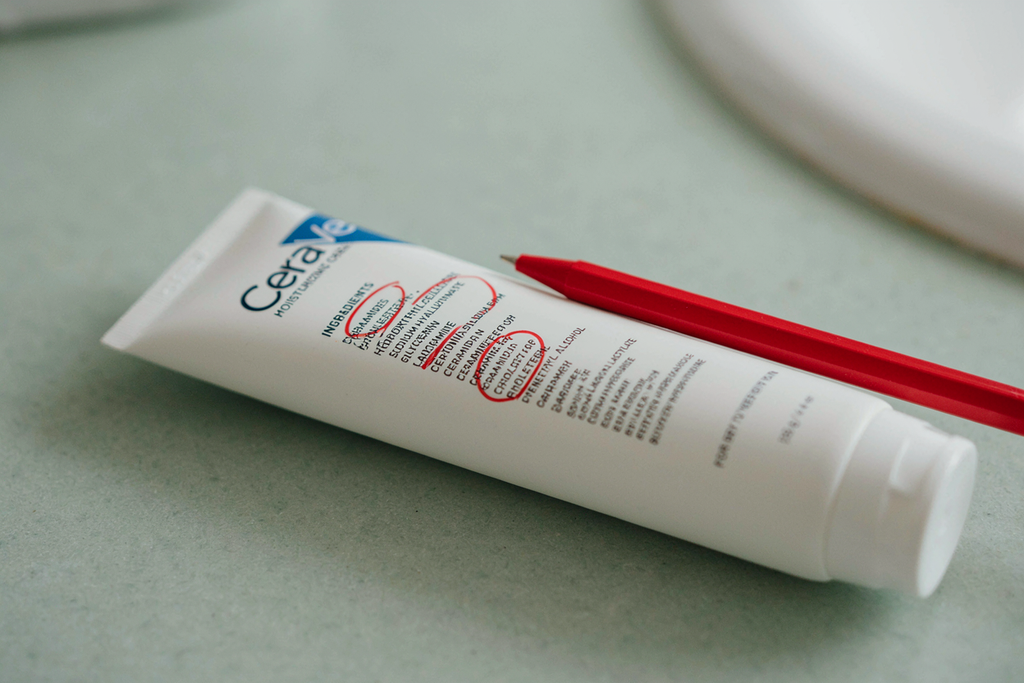
Ceramides should appear within the first ten ingredients, not near the preservatives at the bottom. Fragrance-free means no fragrance compounds at all, which is different from “unscented,” a term that can still involve masking fragrance.
And a shorter overall ingredient list generally means fewer chances for one component to trigger irritation on skin that’s already compromised, which is exactly the skin this category of product is meant to help.
Price Per Use, Not Just Sticker Price
Sticker price alone is a misleading way to compare these five, since jar and tube sizes vary enough to flip the actual value equation. CeraVe’s 19-ounce jar at roughly $20 works out to around a dollar per ounce, among the cheapest per-use costs in this entire category.
Dr. Jart+’s 50ml tube at $48 runs closer to $28 per ounce, nearly thirty times more per ounce than CeraVe, even though the price gap on the shelf looks smaller than that ratio suggests.
That math doesn’t make Dr. Jart+ a bad buy. Its five-ceramide, higher-concentration formula is aimed at active repair over a shorter, more intensive window, not months of daily maintenance the way a large CeraVe jar is designed for.
But it’s worth doing this calculation yourself before assuming the cheaper option is worse, or the pricier one is automatically more effective per application.
Frequently Asked Questions
Is CeraVe or Dr. Jart+ better for skin barrier repair?
CeraVe covers general daily maintenance at a lower price with a proven three-ceramide formula. Dr. Jart+ carries a higher ceramide concentration and brand-conducted clinical data specifically on barrier strength improvement, making it the stronger pick for active, more serious barrier damage rather than everyday upkeep.
How long does it take to see results from a barrier repair cream?
Dr. Jart+’s own clinical testing measured improvement at the four-week mark, and that timeline lines up with what dermatologists generally describe for barrier recovery. Expect gradual improvement over two to four weeks of consistent, twice-daily use rather than an overnight change.
Can a barrier repair cream be too rich for oily skin?
Yes, for some people. First Aid Beauty’s faster-absorbing, lighter formula tends to suit oilier skin types better than the denser, more occlusive options, though oily skin can still have a damaged barrier and shouldn’t avoid ceramide-based products entirely.
Do I need a separate barrier repair cream if I already use a regular moisturizer?
Not necessarily, if your current moisturizer already contains a meaningful concentration of ceramides positioned near the top of the ingredient list. Check your existing product’s label against the criteria above before assuming you need to add a second step.
Is it safe to use a barrier repair cream every day, or only during flare-ups?
Daily use is generally fine and often recommended, particularly for lower-intensity formulas like CeraVe or Cicaplast Baume B5. More concentrated options like Dr. Jart+ Ceramidin can also be used daily, though some people reserve it specifically for periods of active irritation and switch to a lighter option once skin has stabilized.
Picking One and Moving On
The five products above cover the real range of what a genuinely effective barrier repair cream looks like in 2026, from a $17.99 fragrance-free option built for reactive skin to a $48 clinically tested formula for active damage. Check the ingredient list against what’s listed above, match it to your specific situation rather than the highest star rating, and give whichever one you choose a full month before deciding it isn’t working.
For the fuller picture of why ceramides matter this much in the first place, our guide to what the skin barrier is walks through the structure these creams are actually built to repair.