
How to Patch-Test and Safely Introduce Spicules Into Your Routine
How do you know if your skin can handle spicules before you commit your whole face to it? Start smaller than you think
Don’t. Spicules are a mechanical exfoliant, not a moisturizer, so the usual “dab it on and see” patch test doesn’t really cut it here. Below is the actual step-by-step test, what a normal reaction looks like versus a warning sign, and the exact schedule for working spicules into your routine without wrecking your barrier in week one.
How Do You Patch-Test a Spicule Product?
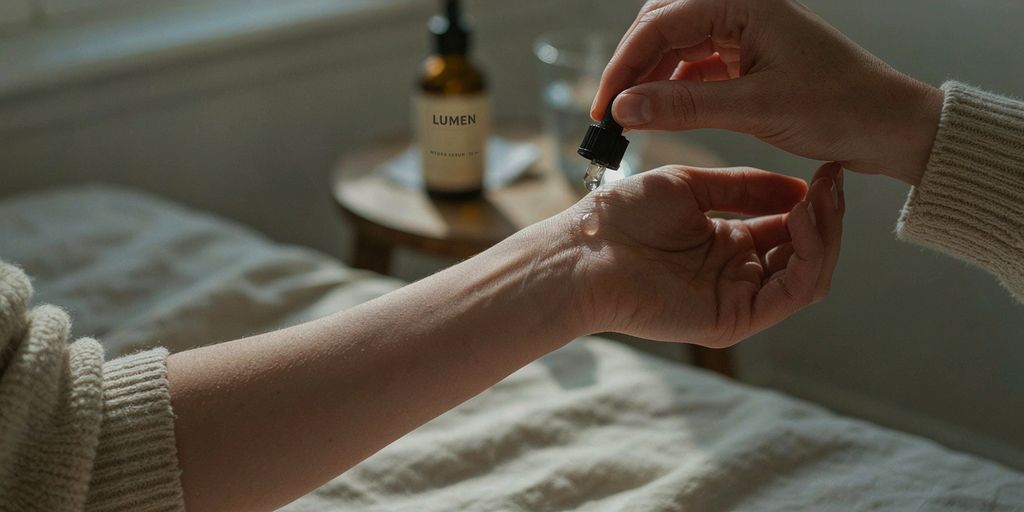
Apply a small amount to your inner forearm, not your face, and leave it undisturbed for 24 to 48 hours without washing the area. Check for redness, swelling, or persistent burning at the 24-hour and 48-hour marks. Mild, brief tingling during application is normal. Redness or irritation still there after 48 hours means skip the face application entirely.
That’s the short version. Here’s why each part of it actually matters, and where people usually get it wrong.
Why Spicules Need Different Patch-Test Rules
Most patch-test advice floating around online was written for chemical products, a new moisturizer, a fragrance, an acid. You dab it on, wait a day, done.
Spicules aren’t chemical irritants. They’re microscopic, needle-shaped structures that physically pierce the stratum corneum, your skin’s outer layer. A 2022 study in the Journal of Cosmetic Dermatology measured spicules at roughly 250 micrometers long, built specifically to breach that layer without going deep enough to draw blood.
That distinction is exactly why the timing matters. A chemical allergy usually shows up fast, within minutes to a few hours. A reaction to mechanical exfoliation can take longer to show its face, since the irritation builds as your skin responds to the actual physical channels forming. That’s the whole reason spicules need a longer observation window than a standard 24-hour chemical patch test.
The Patch-Test Protocol
Follow this exactly, not the shortened version printed on most product boxes.
- Pick your test site. Use the inner forearm, not your face and not your neck. Skin here is thinner than most body skin but tougher than facial skin, which gives you a realistic but lower-stakes preview.
- Cleanse the area first. Wash with a mild, fragrance-free cleanser and let it dry completely. Leftover product residue can throw off your result.
- Apply a small, single dose. One pump or a pea-sized amount is plenty. Don’t rub it in hard; just press it into the skin the way you’d apply it on your face.
- Leave it alone for the full window. Don’t wash the area, don’t cover it, don’t layer anything else on top. Give it a minimum of 24 hours, ideally 48.
- Check at 24 hours. Mild tingling during application and slight, short-lived pinkness are both normal. Anything past that- spreading redness, swelling, or ongoing burning- is your stop sign.
- Check again at 48 hours. This second check is the one most people skip, and it’s the one that actually catches delayed reactions. If the area still looks or feels off, don’t move forward with the product.
What a Normal Reaction Looks Like vs. a Warning Sign
Here’s the difference, laid out plainly, so you’re not left guessing in the mirror.
Normal, expected responses:
- A brief prickling or tingling feeling during application, lasting a few seconds
- Slight pinkness that fades within an hour
- A faint rough texture at the test site for up to 24 hours
Signs to stop and not move to your face:
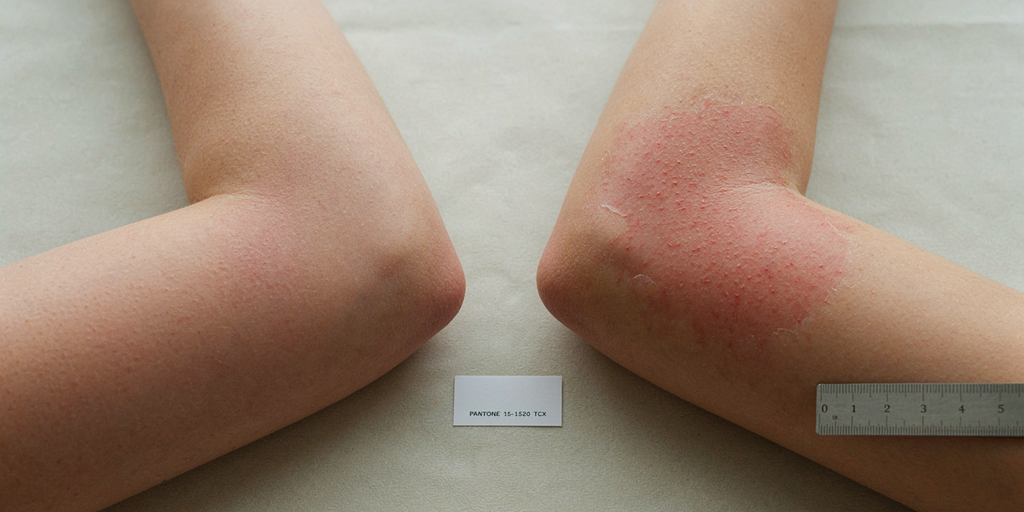
- Redness that spreads beyond the exact spot you applied
- Swelling, hives, or raised bumps
- Burning or stinging that keeps going past the first few minutes
- Any reaction still hanging around at the 48-hour check
- Itching bad enough that you want to scratch the area repeatedly
If you land in that second list, the product isn’t right for your skin right now. That holds even if a friend swears by the same serum, since spicule tolerance varies a lot from person to person based on barrier strength, not brand loyalty.
Where You Test Actually Changes the Result
Testing on your jawline instead of your forearm sounds more “realistic,” but it isn’t really a fair test. Facial skin runs thinner and more reactive than forearm skin for most people, so a product that’s genuinely fine can still cause more visible irritation on the face during a first exposure.
The inner forearm gives you a closer read on how your skin specifically handles the mechanical disruption spicules cause, without the added variable of facial skin’s higher sensitivity throwing things off. Once you’ve cleared the forearm test, a small spot test on a less visible part of the face, like just behind the jawline, is a reasonable second check before going all in.
The Slow Introduction Schedule Once You Pass the Patch Test
Passing the patch test doesn’t mean nightly use starting tomorrow. Ease into it.
- Week 1: One application, at night, on clean, dry skin, followed by a barrier moisturizer. Skip retinol, vitamin C, and acids that same night.
- Week 2: If week 1 caused no lingering irritation, move to two applications, spaced a few days apart.
- Week 3 and beyond: If your skin’s tolerated two uses a week without redness or peeling lasting into the next day, you can bump up to three uses a week, which is the upper end most dermatologists recommend for regular maintenance.
- Any point along the way: If irritation shows up, drop back to the previous frequency for two weeks before trying to increase again.
There’s no prize for rushing this. A serum that works at three times a week will still work if it takes you a month to actually get there.
Who Should Skip the Patch Test and Just Skip Spicules
For a few groups, the patch test isn’t really the deciding factor, since the answer’s already no.
- Anyone with active rosacea, eczema, or another inflammatory skin condition
- Anyone with broken skin, an open cut, or a picked-at blemish in the area
- Anyone currently using a prescription retinoid or an active acne medication, since stacking two aggressive treatments raises irritation risk without adding much benefit
- Anyone who’s never tolerated a physical scrub or a chemical acid without reacting
If you fall into one of these groups, the patch test result isn’t going to change the underlying issue. Talk to a dermatologist before adding spicules to your routine at all.
For more guidelines about Spicules, you can read our previous articles. Click here
Patches vs. Serums: Does the Test Change by Format?
Spicules come in two main formats, and the patch-test approach shifts a bit depending on which one you’re trying.
Serums sit on skin for hours, usually overnight, so your 48-hour observation window captures the full effect of a realistic use session. Test a serum exactly as described above.
Hydrocolloid spot patches work a little differently. They’re built for a fixed wear time, usually 4 to 8 hours, over a single small area like a blemish. For a patch, cut a small piece from the patch material, apply it to your forearm for that same 4- to 8-hour window the product recommends, then remove it and check the site at both the 24-hour and 48-hour marks, same as a serum. The shorter contact time doesn’t mean you get to skip the observation period. Delayed reactions can still show up a day or two later.
If a product comes in both formats from the same brand, passing a patch test on the spot patch doesn’t automatically clear the serum, and vice versa. The base formulations, and often the spicule concentration, differ between the two.
Why the Concentration Number Matters for Your Test
Korean spicule products usually get labeled with a number, something like 100, 300, or 2000, referring to the concentration of the spicule complex. That number changes what your patch test is actually telling you.
A low-concentration product, generally under 500, is formulated for frequent use and tends to be gentler during testing. A high-concentration product, often labeled 2000 or above, delivers a much stronger initial effect, and a clean patch test result on a low-concentration formula doesn’t predict how you’ll handle a stronger one.
If you’re planning to eventually use a higher-concentration product, test that exact concentration directly rather than assuming a pass on the gentler version carries over. This is one of the more common mistakes people make moving from a beginner serum to a more advanced one within the same product line.
For more guidelines about Spicules, you can read our previous articles. Click here
Common Patch-Test Mistakes
A few habits quietly undo the value of testing in the first place.
- Testing on the face instead of the forearm. This defeats the whole purpose of a low-stakes trial run.
- Washing the test area early. Rinsing off after a few hours means you never actually see a delayed reaction.
- Layering other actives on the test site. Applying a retinol or acid over the same patch makes it impossible to tell which product caused any irritation.
- Skipping the 48-hour check. A lot of mechanical irritation shows up on day two, not day one.
- Assuming a clear patch test means unlimited use. A passed patch test tells you the product probably won’t cause an acute reaction. It doesn’t tell you how your skin handles repeated exposure, which is exactly why the slow introduction schedule still matters afterward.
Frequently Asked Questions
How long should I wait after a patch test before using spicules on my face?
Wait the full 48 hours and confirm there’s no lingering redness, swelling, or irritation before applying anything to your face. If the test site looks completely normal at that point, you’re clear to start with a single low-frequency application.
Can I patch-test a spicule product the same way I test a new moisturizer?
Not quite. Spicules cause mechanical irritation from physically piercing the skin, not just a chemical reaction, so reactions can take longer to show up. Use the full 48-hour window rather than the shorter 24-hour check that works fine for most moisturizers.
Is tingling during a patch test a bad sign?
No. A brief tingling sensation during application is expected and just reflects the microchannels forming as the spicules do their job. It only becomes a concern if that sensation turns into ongoing burning or pain.
What if my patch test is fine but my face still reacts once I start using it?
This happens sometimes, since facial skin is more reactive than forearm skin. If it happens to you, stop using the product for a few days, let your skin recover, and reintroduce it at a lower frequency, once every seven to ten days, before working back up.
Do I need to patch-test every new spicule product, even from the same brand?
Yes. Different concentrations, even within the same brand’s lineup, can behave very differently on your skin. A formula you’ve tolerated well at one strength doesn’t guarantee the same result at a higher concentration or a totally different product.
How do I know if my skin is too sensitive for spicules altogether, even before testing?
A history of reacting badly to physical scrubs, chemical acids, or retinoids is a reasonable signal that spicules might not suit your skin. It doesn’t rule it out entirely, but it means you should treat the patch test result with extra caution and lean toward a lower-concentration product if you decide to try one anyway.
Should I patch-test in the morning or at night?
Timing doesn’t really change the result, but testing at night mirrors how you’ll actually use most spicule products, since they’re typically part of an evening routine. It also means your 24-hour and 48-hour checks land at convenient times actually to look at the site in daylight.
Conclusion
Patch-testing isn’t a formality you rush through to get to the “real” skincare. It’s the step that decides whether spicules belong in your routine at all, and it’s the one most guides mention in a single sentence before moving on to marketing copy.
Give it the full 48 hours, watch for the specific signs above, and follow the slow ramp-up once you’re cleared. That’s the difference between a serum that quietly becomes part of your routine and one that leaves you dealing with a compromised barrier for weeks.
Want to understand the mechanism behind why spicules cause that initial tingling in the first place? Our guide to how spicules work breaks down exactly what’s happening at the cellular level during that first application.
For more guidelines about Spicules, you can read our previous articles. Click here
very informative
Thank you for your valuable feedback! We’re glad you found the article informative and helpful. We truly appreciate you taking the time to share your thoughts.
This is such an full fledged article I’ve ever read.