
How to Use Spicule Serums: Step-by-Step Routine (AM/PM)
Most people over-apply spicule serum in week one, then quit when their skin reacts. Here’s the routine that actually avoids that
You’re not alone, and the short answer is: probably not quite yet. Most people apply spicule serum like a regular product, layer three actives on top the same night, and wonder why their skin looks angry by Thursday. Below is the actual AM/PM routine, built from what board-certified dermatologists have told CNN Underscored, NBC News, and other outlets about spicule skin care specifically, not a generic “cleanse, tone, moisturize” template with the word spicule dropped in.
How to Use Spicule Serums, Step by Step?
Apply spicule serum at night, on clean, dry skin, before any other product. Press it in rather than rubbing. Skip retinol, vitamin C, and exfoliating acids that same night. Follow with a hydrating, barrier-supporting moisturizer. Start once a week, since dermatologists say the microchannel spicules take about five days to fully close.
That’s the routine in miniature. Here’s the full version, with the reasoning behind each step.
What You’ll Need Before You Start
You don’t need a ten-step routine to use spicule skin care correctly. You need four things:
- A gentle, low-pH cleanser to remove makeup, sunscreen, and daily buildup before applying anything else
- Your spicule serum or moisturizer, applied as the very first treatment step
- A barrier-supporting moisturizer to use immediately after, something with ceramides or hyaluronic acid rather than active ingredients
- A broad-spectrum SPF 30 or higher for the following morning, since skin with fresh microchannels is more reactive to sun exposure
If you already own a basic routine built around these four categories, you have everything you need. You don’t need to buy a whole new lineup just because one product changed.
PM Routine: Step by Step
Spicule products belong at night. Here’s the order that actually works.
- Cleanse thoroughly. Remove all makeup, sunscreen, and the day’s grime with your regular cleanser. Pat your face completely dry, since spicules need a dry surface to grip properly.
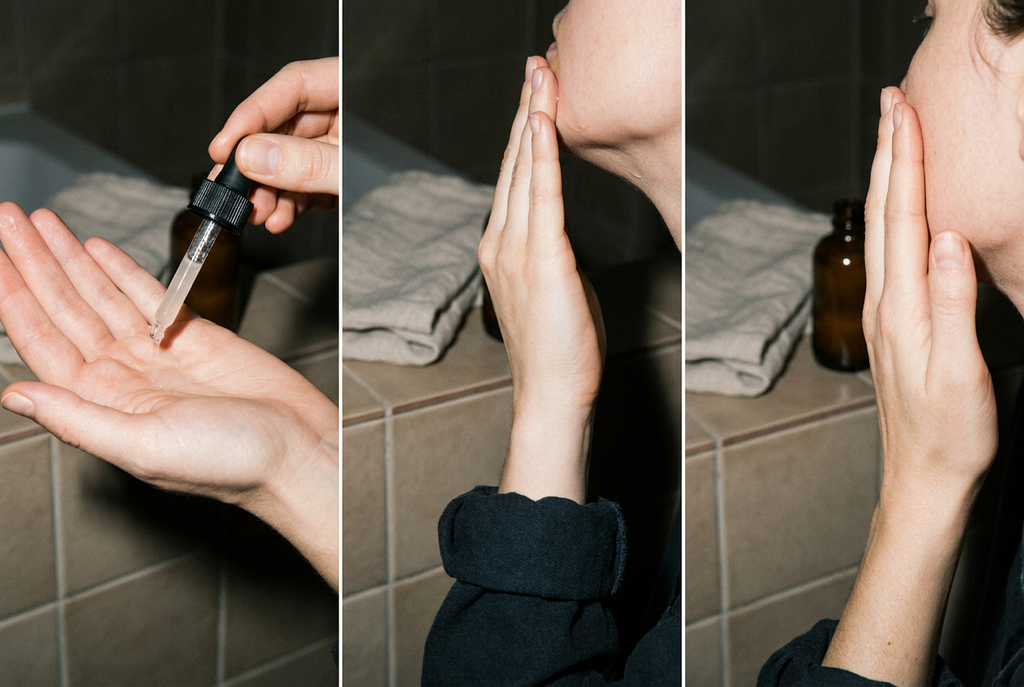
- Apply the spicule product first. Whether it’s a serum, a gel, or a capsule moisturizer, apply it before anything else touches your skin. Use the amount your product recommends, usually a thin, even layer.
- Press it in, don’t rub. Rubbing or massaging vigorously increases friction and irritation without improving absorption. A gentle press with your fingertips is enough.
- Expect a prickling sensation. Board-certified dermatologist Dr. Chang Son has told CNN Underscored that this feeling comes from the spicules physically creating microscopic channels in the skin, and it can last anywhere from a few seconds to a couple of hours depending on the formula and your own sensitivity.
- Wait a few minutes, then follow with moisturizer. Give the serum a moment to settle before layering a hydrating, ceramide- or hyaluronic acid-based moisturizer on top. This step matters more than people expect, since it supports your barrier while those microchannels are still open.
- Skip everything else that night. No retinol, no vitamin C, no AHAs or BHAs. Save those for a different evening entirely.
AM Routine: Step by Step
The morning after a spicule application is where sun protection earns its keep.
- Cleanse gently. A splash of water or a mild cleanser is enough. Avoid anything exfoliating or foaming the morning after use.
- Apply your usual hydrating serum or moisturizer. Nothing needs to change here from your normal routine.
- Apply broad-spectrum SPF 30 or higher, without exception. This is the one non-negotiable step. Skin that’s had microchannels opened overnight is more vulnerable to UV damage than usual.
- Continue your normal routine as planned. Makeup, additional moisturizer, whatever you’d normally do, none of it needs adjusting once SPF is on.
Why Once a Week to Start
Most brands print “use two to three times a week” right on the label. Dermatologists interviewed by CNN Underscored say that’s ambitious for a first go.
Double board-certified dermatologist Dr. Michael Tassavor explained that the microchannel spicules take roughly five days to close fully. Spacing applications closer together than that doesn’t necessarily give you better results; it just means you’re reopening skin that hasn’t finished healing from the last round.
The practical schedule looks like this:
- Weeks 1 to 2: One application per week, at night, following the full PM routine above.
- Weeks 3 to 4: If your skin shows no lingering redness or irritation the day after, move to twice a week, spaced at least three days apart.
- Month two onward: Three times a week is the upper limit most dermatologists recommend, and only once your skin has clearly tolerated twice-weekly use without issue.
Building up slowly isn’t overly cautious. It’s the actual, dermatologist-backed pace this ingredient calls for.
What to Pair It With, and What to Skip That Same Night
Spicules work by creating a temporary opening for other ingredients to absorb more effectively. That makes some pairings genuinely useful and others a bad idea on the same night.
Good pairings, applied right after your spicule product:
- Hyaluronic acid, for hydration that actually reaches deeper
- Peptides, which several formulas are built around specifically to take advantage of the increased absorption
- Ceramide-based moisturizers, to support your barrier while it recovers
Skip these on spicule nights:
- Retinol or retinoids, since layering two forms of skin disruption compounds irritation risk
- Vitamin C, particularly at higher concentrations, for the same reason
- AHAs or BHAs, which exfoliate chemically right when your skin is already dealing with physical exfoliation
- Any other actives your dermatologist has flagged as strong for your specific skin
If you want to use a strong active like retinol regularly, alternate nights. Spicules on Monday and Thursday, retinol on Tuesday and Friday, is a reasonable split that lets both do their job without stacking irritation.
Who Should Skip Spicules Entirely
For some people, the question isn’t how to use spicule serum correctly. It’s whether to use it at all. Dermatologists quoted by CNN Underscored and NBC News point to a consistent list:
- Anyone with a compromised or already-irritated skin barrier
- Anyone with highly sensitive, reactive skin, unless a dermatologist has specifically cleared it
- Anyone currently taking Accutane or another strong oral acne medication
- Pregnant women
- Anyone with a shellfish allergy, since some spicules are marine-derived
- Anyone who’s recently had a chemical peel, laser treatment, or professional microneedling session
- Anyone using prescription-strength retinoids or multiple exfoliating actives already, without dermatologist guidance on how to fit spicules in safely
If more than one of these applies to you, talk to a dermatologist before adding this product to your routine, rather than relying on a patch test alone to make the call.
What a Normal Reaction Looks Like vs. a Warning Sign
A brief prickling sensation during application is expected. So is mild, short-lived redness that fades within an hour or two.
What isn’t normal: redness that spreads beyond the treated area, swelling, ongoing burning, or irritation that’s still visible the next day. Board-certified dermatologist Dr. Rachel Westbay has noted that adding a stimulating product on top of skin that’s already dealing with redness or irritation tends to backfire rather than help, which is exactly why the who-should-skip list above matters as much as the routine itself.
Where Spicules Fit in a Full Korean-Style Routine
If you’re already running a multi-step Korean skin care routine, toner, essence, ampoule, serum, moisturizer, spicules change the order slightly on the nights you use them.
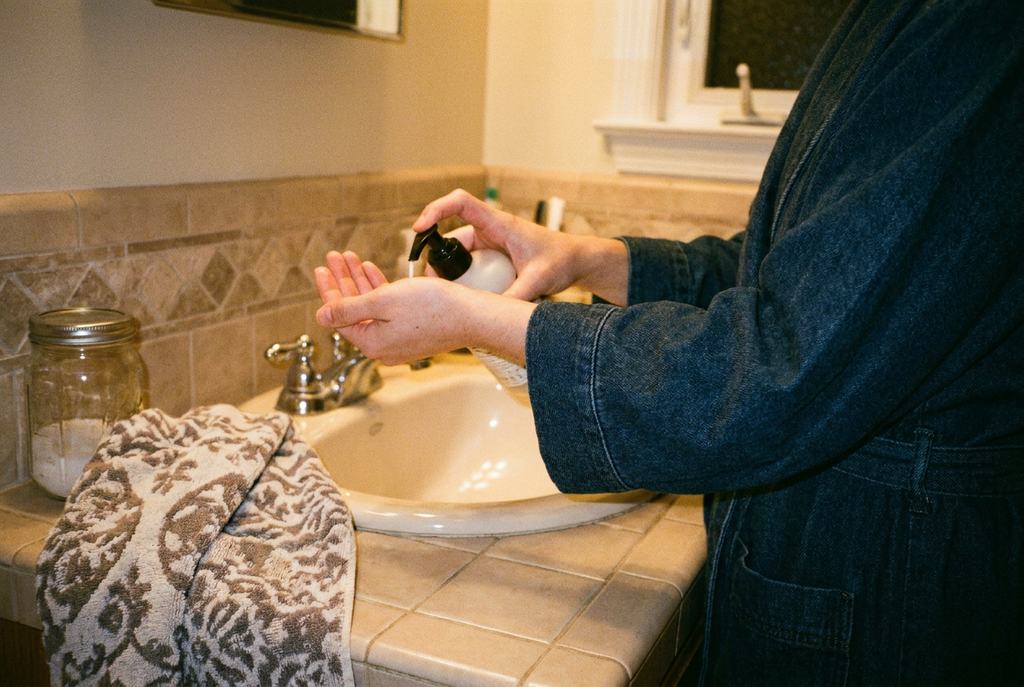
Cleanse first, as always. Skip toner and essence on spicule nights, or use them before cleansing is complete rather than after, since spicules need to contact dry skin directly to work properly. A layer of toner or essence underneath can create a barrier that blocks the spicules from reaching the surface effectively.
Apply the spicule product directly to dry skin, exactly as described in the PM steps above. Once it’s absorbed, you can layer a hydrating essence or ampoule on top if your skin tolerates it well, followed by your regular moisturizer. Save sheet masks, additional serums, and heavier treatments for a different night, since piling on extra steps defeats the point of giving your skin a simpler recovery window.
On the nights you’re not using spicules, run your full routine as usual. There’s no need to simplify every single day, only on the specific nights spicules are in the mix.
Real Products People Are Actually Using
As of now, spicule products are more commonly found through Amazon.com and Korean beauty specialty retailers than on Sephora or Ulta shelves, though that’s shifting as the category grows. Two examples currently available at accessible U.S. price points:
- A spicule-infused sheet mask combining French collagen, elastin, hyaluronic acid, and peptides, priced around $28.99 on Amazon.com
- Aprilskin’s TXA Niacinamide Toning Shot 99 Spicule Serum, formulated with tranexamic acid for sensitive, redness-prone skin, priced around $18.90 on Amazon.com
Neither of these is an endorsement to buy blindly. They’re examples of what a real spicule product and price point actually look like right now, so you know what to expect before you shop.
A Sample First Month, Laid Out
Seeing the schedule mapped across actual weeks tends to make it click faster than a general rule does.
- Week 1: Spicule serum on Monday night only. Routine every other night.
- Week 2: Spicule serum on Monday night again. Check your skin Tuesday morning for any lingering redness before deciding whether to continue at this pace.
- Week 3: If week 1 and 2 went smoothly, add a second night, Monday and Thursday, spaced far enough apart to respect that five-day closure window.
- Week 4: Stay at twice a week if your skin still looks calm the mornings after. This is also a reasonable point to reassess whether once or twice a week is simply your ceiling, since not everyone needs to progress to three times weekly.
No rule says you have to reach three uses a week by any specific point. Plenty of people get excellent results staying at once or twice weekly indefinitely.
Frequently Asked Questions
Can I use spicule serum every night?
No. Dermatologists recommend starting a spicule serum routine once a week and building up gradually, since the microchannels spicules create take about five days to close. Nightly use doesn’t give your skin time to recover between applications.
Should I use spicule serum in the morning or at night?
At night. Applying it before bed gives your skin hours to process the microchannel formation without immediate sun exposure, and it lets you follow up the next morning with sunscreen while your skin is more reactive to UV.
What happens if I accidentally use retinol the same night as a spicule serum?
A single accidental overlap likely won’t cause lasting harm, but expect more redness or sensitivity than usual the next day. Going forward, space the two out on alternating nights rather than combining them.
How long does the tingling from spicule serum last?
It varies by formula and by person. Some people feel it for only a few seconds, while dermatologists note it can last a couple of hours for others. It should never escalate into ongoing burning or pain.
Do I need to patch-test a spicule serum before starting this routine?
Yes. A patch test on your inner forearm, checked at 24 and 48 hours, is a separate first step before this AM/PM routine begins. If you haven’t done one yet, our patch-testing guide walks through exactly how.
Conclusion
The spicule serum routine itself isn’t complicated. Cleanse, apply the spicule product first, skip your strong actives that night, moisturize, and let sunscreen handle the morning after. What trips people up is frequency, not technique, so if you take away one thing from this, let it be patience with the schedule rather than the steps themselves.
Want to understand the actual mechanism behind why that five-day closure window exists in the first place? Our guide to how spicules work breaks down what’s happening at the cellular level during that time.