
Best Ingredients to Pair With Spicules (Hyaluronic Acid, Niacinamide, Vitamin C)
Spicules create microchannels that close within 24 to 48 hours, which means what you layer on top in that window matters more than the serum itself.
Good news: most of what you already own pairs fine with spicules. The real question isn’t whether hyaluronic acid, niacinamide, and vitamin C are safe. It’s which order to apply them in, and why vitamin C specifically comes with a timing catch nobody explains clearly. Below is what board-certified dermatologists actually recommend pairing with spicules, straight from their own interviews, not a generic “these ingredients go well together” list recycled from unrelated skincare content.
What Are the Best Ingredients to Pair With Spicules?
Hyaluronic acid and niacinamide are the two safest, most universally recommended ingredients to pair with spicules. Both support hydration and barrier repair when your skin needs it most, immediately after spicules create microchannels. Vitamin C also pairs well, according to dermatologists, though it works better applied in a separate morning routine rather than layered the same night as spicules.
That’s the short version. Here’s the reasoning behind each one, plus what actually happens if you get the order wrong.
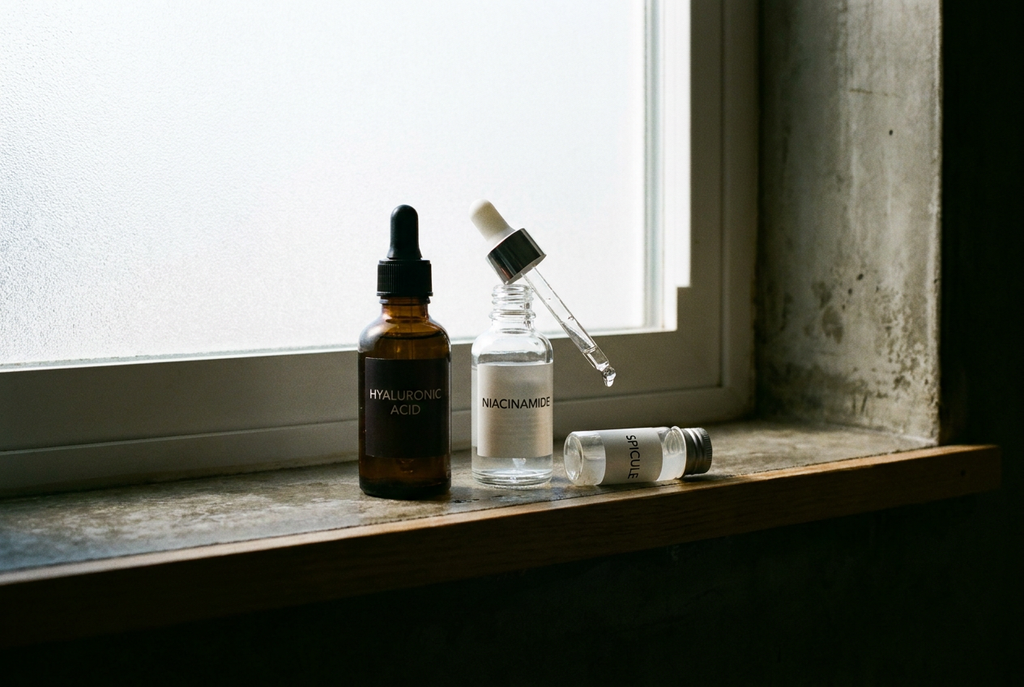
Hyaluronic Acid: The Safest, Most Obvious Pairing
Hyaluronic acid is a humectant, and it’s consistently named among the best ingredients to pair with spicules for exactly that reason. It pulls water into the skin rather than doing anything active or exfoliating, which makes it close to risk-free to layer with spicules.
Board-certified dermatologist Dr. Deborah Spey has specifically recommended following spicule application with hyaluronic acid, precisely because it supports the skin while those microchannels are still open and slightly more permeable than usual. You’re not fighting the spicules for absorption room. You’re handing your skin exactly what it needs to stay calm and hydrated during recovery.
Apply it right after your spicule product, before your moisturizer. There’s no waiting period required, and no concentration threshold to worry about. This is one pairing you genuinely don’t need to overthink.
Niacinamide: The Barrier-Building Partner
Niacinamide does double duty as one of the more overlooked ingredients to pair with spicules. It calms inflammation and helps rebuild the same skin barrier that spicules temporarily disrupt.
This matters more than it sounds like it should. A 2005 study in the International Journal of Cosmetic Science found that topical niacinamide measurably increased ceramide and free fatty acid production in skin, both of which are structural components of a healthy barrier. That’s not a small detail when you’re applying a product designed to physically breach that same barrier a few minutes earlier.
Dermatologists interviewed by NBC News have noted that spicules can help ingredients like niacinamide penetrate more deeply and work more effectively once they’re inside. Combine that delivery boost with niacinamide’s own barrier-repair properties, and you get a pairing that actively works against the one downside spicules carry, mainly, temporary barrier disruption.
Use it the same way as hyaluronic acid: right after the spicule product, before your final moisturizer.
Vitamin C: Where the Timing Question Actually Comes From
Here’s the pairing nobody explains well, and the one that complicates any simple list of ingredients to pair with spicules. Vitamin C is one of the ingredients dermatologists most often mention alongside spicules, but almost nobody mentions the scheduling conflict underneath that recommendation.
Vitamin C works best applied in the morning. According to dermatologists interviewed by CNN Underscored, applying sunscreen over vitamin C actually helps prevent the vitamin C from oxidizing, which is part of why morning use is the standard recommendation across the skincare industry, spicules or not.
Spicules, on the other hand, belong at night. That’s not a style preference. It’s because the microchannels they create take about five days to close, and applying anything at night gives your skin hours to process that before facial sun exposure the next day.
Put those two facts together, and you get a genuine scheduling mismatch. Dr. Spey’s recommendation to pair spicules with vitamin C generally assumes you’re using a vitamin C-containing spicule product itself, formulated together as one step, rather than layering a separate vitamin C serum on top of spicules the same night. If your spicule product already contains vitamin C in the formula, you don’t need to do anything extra. If you’re using a standalone vitamin C serum, keep it in your morning routine and let your spicule product handle the night shift separately.
Do Niacinamide and Vitamin C Actually Conflict With Each Other?
You’ve probably read that niacinamide and vitamin C cancel each other out. That advice is outdated, and it’s worth clearing up since you might end up using both around your skincare routine.
Board-certified dermatologist Dr. Meena Singh has explained that this myth comes from older research combining pure niacinamide with ascorbic acid at high heat, a reaction that produced nicotinic acid and caused irritation. At room temperature, which is how you’re actually storing and applying your products, that reaction doesn’t happen. Niacinamide and vitamin C can be used together safely, whether layered or combined in a single formula.
This matters for your spicule routine specifically, and for how you think about niacinamide and vitamin C as ingredients to pair with spicules going forward. It means you don’t need to choose between niacinamide and vitamin C when building out your morning and evening steps. Niacinamide can sit in your spicule-night routine, and vitamin C can stay in your morning routine, without either one canceling the other’s benefits.
Peptides, PDRN, and Exosomes: The Advanced Pairings
Beyond the three ingredients most people ask about, dermatologists point to a second tier of ingredients to pair with spicules for anyone chasing more advanced results.
Board-certified dermatologist Dr. Danny Guo has specifically recommended pairing spicules with PDRN, exosomes, and stem cell extracts rather than sticking to the basics. These ingredients work on cell signaling and repair processes, and the logic is the same as with niacinamide: spicules open a temporary pathway, and a more advanced active can use that pathway to do more than it would sitting on the surface of intact skin.
This tier isn’t necessary for most routines. PDRN and exosome products tend to cost more and target more specific concerns, like advanced signs of aging or slow wound healing, rather than general hydration or brightening. If you’re already comfortable with hyaluronic acid and niacinamide and want to add one more ingredient to pair with spicules, PDRN is the next reasonable step up, not vitamin C or a stronger acid.
Ceramides: The Ingredient Nobody Mentions
Ceramides rarely make anyone’s list of ingredients to pair with spicules, and that’s a genuine gap in most coverage of this topic.
Ceramides are lipids that make up a large share of the material holding your skin barrier together. Since spicules temporarily disrupt that same barrier, a ceramide-based moisturizer applied as your final step does more than just feel nice. It directly replaces some of the structural lipid your skin needs while the microchannels close back up.
Look for this in your final moisturizer step rather than as a separate serum. Most barrier-focused moisturizers already include a ceramide complex, so this isn’t usually an extra product to buy, just a detail worth checking on the moisturizer you already use after spicules.
Why Order Matters More Than Most People Realize
Picking the right ingredients to pair with spicules only works if the application order backs it up. Applying hyaluronic acid before your spicule product, for example, largely defeats the purpose, since the humectant layer sits on top of intact skin rather than settling into the microchannels spicules are about to create.
The same logic applies in reverse with vitamin C. Applying a vitamin C serum before spicules doesn’t just create a scheduling headache; it also means the antioxidant is sitting on the surface when the spicules go to work, rather than being absent so the spicules can do their job on clean, product-free skin. This is part of why dermatologists are specific about sequencing rather than just listing which ingredients are broadly compatible.
Think of it less as a list of safe ingredients and more as a relay. Spicules go first and open the door. Hyaluronic acid and niacinamide walk through it immediately after. Vitamin C waits for its own separate turn, usually the next morning. Retinoids and acids wait even longer, on a night when spicules aren’t in the mix at all.
What Not to Pair With Spicules
A few ingredients work against spicules rather than with them. Dermatologists Dr. Danny Guo and Dr. Deborah Spey both advise avoiding these on the same night as a spicule product:
- Retinoids, since combining two forms of skin disruption compounds irritation risk
- AHAs and BHAs, which chemically exfoliate right when your skin is already dealing with physical exfoliation
- High-concentration exfoliating acids of any kind, for the same reason
If retinol or an acid is a non-negotiable part of your routine, alternate nights rather than skipping either one entirely. Spicules on Monday and Thursday, your acid or retinoid on Tuesday and Friday, keeps both working without stacking the irritation. Our full guide to spicule serum routines covers this scheduling in more depth if you want the complete week-by-week breakdown.
The Order of Application That Actually Works
Once you know which ingredients to pair with spicules, the order matters as much as the ingredients themselves.
- Cleanse and dry your skin completely. Spicules need dry skin to grip properly.
- Apply your spicule product first, before anything else touches your face.
- Layer hyaluronic acid and niacinamide next, in either order, since neither interferes with the other.
- Finish with a barrier-supporting moisturizer.
- Save vitamin C, retinol, and acids for a different step in your routine, whether that’s the next morning or a separate night entirely.
A Sample Routine, Built Around These Pairings
Here’s what a full week might look like once you’ve settled into a rhythm:
- Monday night: Spicule serum, followed by hyaluronic acid and niacinamide, then moisturizer.
- Tuesday morning: Vitamin C serum, followed by moisturizer and sunscreen.
- Thursday night: Repeat the Monday spicule routine.
- Friday morning: Repeat the Tuesday vitamin C routine.
- Every other day: Your normal routine, whatever that already includes.
This keeps every ingredient doing its best work without any of them undercutting each other.
Frequently Asked Questions
Can I use vitamin C and spicules in the same routine?
Yes, but not layered together the same night in most cases. Use vitamin C in your morning routine, where dermatologists say it works best alongside sunscreen, and keep spicules in your nighttime routine unless your spicule product already has vitamin C built into the formula.
Is hyaluronic acid always safe to pair with spicules?
Yes. Hyaluronic acid is a hydrating humectant with no exfoliating or irritating properties, which makes it one of the two ingredients to pair with spicules that dermatologists most consistently recommend.
Why do dermatologists recommend niacinamide specifically after spicules?
Niacinamide supports the skin barrier that spicules temporarily disrupt, and research has shown it increases ceramide production in the skin, which directly helps repair the same barrier function spicules are working against for a few hours after application.
Can I mix niacinamide and vitamin C if I’m also using spicules?
Yes. The idea that niacinamide and vitamin C cancel each other out comes from outdated lab conditions involving high heat that don’t apply to normal skincare use. You can use both; just keep vitamin C in your morning routine and niacinamide as part of your spicule-night routine.
What ingredients should never be paired with spicules?
Retinoids and chemical exfoliants like AHAs and BHAs are the two categories dermatologists consistently name as ingredients to avoid pairing with spicules, since layering two forms of skin disruption raises irritation risk without adding any real benefit.
Building a Routine That Actually Works Together
The best ingredients to pair with spicules aren’t complicated once you separate the timing question. Apply hyaluronic acid and niacinamide right after, every time. Vitamin C stays in your morning routine unless it’s already built into your spicule product. Retinoids and acids get their own separate nights.
Get that structure right, and you’re not choosing between a good spicule routine and a good vitamin C routine. You’re running both, on the schedule each ingredient to pair with spicules actually needs.
Want the full breakdown of how often to use spicules before adding any of these pairings into the mix? Our AM/PM spicule routine guide covers exactly that.
Every source mentions vitamin C as spicule-compatible, but none flag that vitamin C is a morning ingredient and spicules are a nighttime one — a real scheduling conflict this piece resolves directly instead of glossing over.