
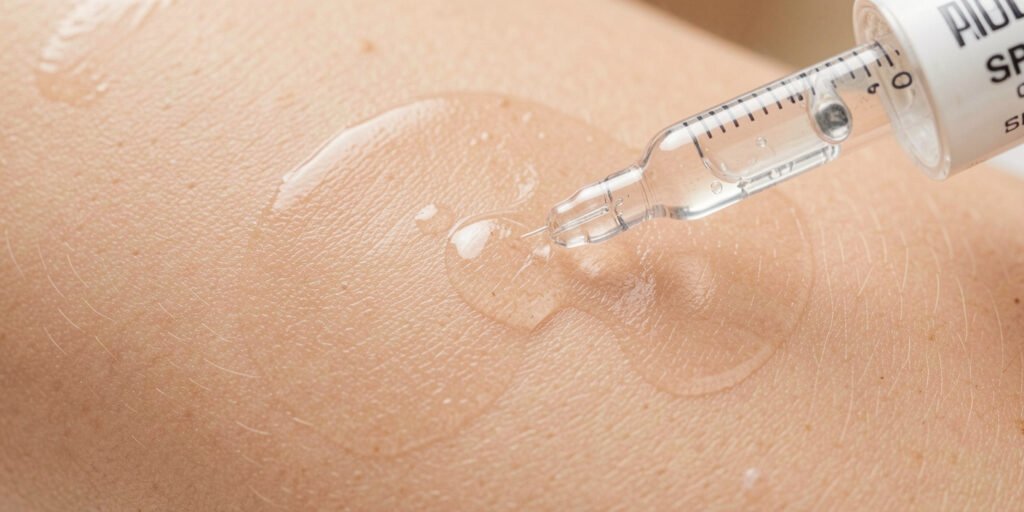
Spicules in Skincare: What They Are, How They Work, and Whether They’re Worth It
You’ve probably seen a serum promising “liquid microneedling” with zero needles involved, and you clicked because that sounds almost too convenient to be real. Fair reaction. Spicules in skincare are the ingredient behind that claim, and they’re worth understanding before you drop $25 on a bottle based on a TikTok comment section. This guide covers what these microscopic spears actually do to your skin, why that tingling sensation isn’t automatically a good sign, and what the concentration number on the label is really telling you. By the end, you’ll know who should stay far away from this category and what a realistic week-by-week result looks like.
What Are Spicules in Skincare?
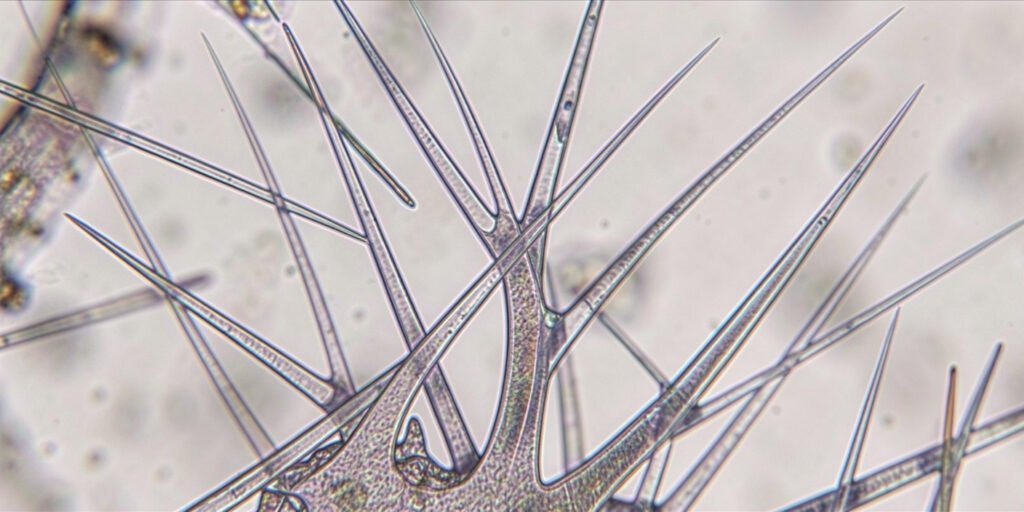
Spicules are microscopic, needle-shaped structures, usually pulled from freshwater or marine sponges, that form tiny channels in the outer layer of skin once they’re applied in a serum or mask. Think of them as a topical stand-in for microneedling: they physically disturb the stratum corneum, trigger a small wound-healing response, and give other active ingredients a better shot at actually being absorbed. Most of them break down on their own within about a day, through your skin’s normal turnover process.
That one mechanism explains almost everything worth knowing about this ingredient. It also explains why the marketing has outpaced the science in a lot of cases.
What the Numbers on the Bottle Actually Mean
Nobody else covering this topic explains this part, and it’s honestly the part that decides whether the product does anything at all. Korean spicule serums almost always come labeled with a number attached, something like Reedle Shot 100, Reedle Shot 300, or an exosome shot sitting at 7500 ppm. That number isn’t a strength rating the way SPF works. It usually points to the concentration of the active spicule or peptide complex measured in parts per million, and a bigger number does not mean a better or safer product. It just means more.
A lower number, somewhere in the 100 to 300 range, signals a gentler formula meant for regular rotation, maybe two or three times a week. A high number, especially anything sitting at 3000 ppm or above, is built for shorter, less frequent use, and treating it like your everyday serum is a fast way to overdo it. Dermatologists interviewed by NBC Select flagged concentration as the exact spot where most spicule products fall apart: too low and nothing happens, too high without easing in and you’re dealing with irritation instead of results.
Past the number itself, check what the spicules are paired with. A formula built around centella asiatica, panthenol, or niacinamide is designed to cushion the micro-injury the spicules cause. A bottle with nothing but spicules and a thin, watery base is leaving your skin to handle that repair work with less backup.
How Spicules in Skincare Work on the Skin
Once you apply it, a spicule serum sits against the epidermis and opens up thousands of microscopic pathways, sometimes called microchannels, through the outermost barrier. It’s the same idea behind medical microneedling, minus the device. A peer-reviewed study published in Drug Delivery and Translational Research found that sponge-derived spicules boosted total skin absorption of a topical anesthetic by nearly tenfold compared to the same formula applied without them, with most of the drug reaching deeper skin layers instead of sitting on the surface.
Those channels also set off a small, controlled inflammatory response, the same kind of signal your skin sends after a cut or a chemical peel. That’s what pushes fibroblasts to churn out more collagen and speeds up how fast old, dull cells on the surface shed. A separate study on spicule-based delivery found that how well a spicule enhanced permeability tracked directly with its aspect ratio, meaning long, narrow spicules created more effective channels than short, blunt ones did. That’s worth noting because it’s the physical shape doing the work here, not some chemical reaction.
Within roughly 24 hours of applying spicules in skincare, your skin’s proteolytic enzymes break the structures down, and they shed along with the top layer of dead skin during normal desquamation. Nothing sticks around once that cycle wraps up.
Spicules in Skincare vs. Microneedling vs. Chemical Exfoliants
It helps to line spicules in skincare up against the two categories people keep comparing them to, since each one is solving a different problem.
- Traditional microneedling, whether it’s done in a dermatologist’s chair or with a home derma roller, uses a device with metal needles set to a fixed, controlled depth. That gives you a more precise injury and a stronger collagen response, along with more downtime and, if you’re going the professional route, a real cost per visit.
- Chemical exfoliants like AHAs and BHAs dissolve the bonds holding dead skin cells together at the surface. They don’t create channels into the skin, and they can’t physically push other ingredients deeper the way spicules do.
- Spicules land somewhere in the middle. They create a physical channel similar to microneedling, but shallower, less uniform, and much less controlled, since nobody’s aiming a device at a set depth. They exfoliate at the same time too, which acids and physical scrubs usually handle as a separate step.
None of these three replace the other two. A dermatologist quoted in Who What Wear’s coverage described spicules as more active than a standard exfoliant but less invasive than an in-office procedure, and that’s really the gap they’re built to fill.
The Real Benefits of Spicules in Skincare
The clearest, best-backed benefit here is delivery. Layer a serum with hyaluronic acid, peptides, or PDRN over freshly applied spicules, and those ingredients get past the surface instead of just sitting on top of it. That’s the whole reason brands bundle spicules with brightening or hydrating actives instead of selling them on their own.
Texture comes in second. Because spicules exfoliate mechanically without the scrubbing motion of a gritty physical exfoliant, they tend to smooth rough patches and refine how pores look with a lot less friction-related irritation than a scrub causes.
Third is a modest bump in collagen production, driven by that same wound-healing response medical microneedling relies on, just at a much smaller scale. Treat it as a supporting player in your routine, not a swap-in for retinoids, sunscreen, or an actual in-office treatment if collagen loss is the thing you’re really trying to fix.
Who Should Avoid Spicules in Skincare
Spicules in skincare aren’t universally safe, and skipping this section is exactly how people end up with a wrecked barrier. Steer clear if any of this sounds like you.
- You’re dealing with active rosacea, eczema, or another inflammatory skin condition right now. The same micro-injury that helps calm, resilient skin regenerate will just aggravate a barrier that’s already struggling.
- You have broken skin, a cut, or a blemish you’ve been picking at. Spicules aren’t a spot treatment for anything open or actively inflamed.
- You’re mid-course on a retinoid or an active acne medication. Stacking two aggressive exfoliation methods raises your irritation risk without adding anything useful.
- You’ve never used a physical exfoliant or acid without your skin reacting badly. Spicules run more intensely than most surface-level exfoliants, not less.
Dermatologists interviewed for NBC Select’s reporting on spicules in skincare were consistent here: sensitive, reactive, or barrier-impaired skin needs real caution, because a compromised barrier just won’t tolerate the mechanical stress well.
How to Use Spicules in Skincare the Right Way
Technique matters here almost as much as which product you pick.
- Start on skin that’s clean and fully dry. Spicules are formulated to go on first, right after cleansing and before anything else.
- Use a small amount and press it into the skin instead of rubbing it around. Friction ramps up irritation without making the product work any better.
- Follow up right away with something hydrating and barrier-supporting. Save the retinoids, AHAs, and BHAs for a different night entirely.
- Cap it at two or three nights a week while you’re getting started, and stick to nighttime use so your skin has hours to recover before makeup or sun exposure comes into play.
- Wear sunscreen the next morning, no exceptions. Skin with fresh microchannels reacts to UV more than it normally would.
A brief tingling or prickling feeling in the first few seconds is expected, not a sign you’ve messed up. Redness, burning, or peeling that’s still there the next day means the concentration or frequency is too much for your skin right now, and the fix is dialing back, not toughing it out.
What to Expect, Week by Week
Most coverage of spicules in skincare stops at “it works” without saying what that actually looks like over time, so here’s a more honest timeline based on how the mechanism actually functions.
The first one or two times you use it, expect the tingling and maybe some mild, short-lived redness right after application. That’s the microchannels forming, and it should calm down within the hour.
By week two, assuming your skin has handled it fine so far, texture is usually the first thing you’ll notice changing. Rough patches and visible pores tend to look smoother, since the exfoliation and better ingredient absorption are stacking on top of each other.
By weeks four to six, with steady two-to-three-times-a-week use, a subtle improvement in tone and firmness is the more realistic payoff, coming from that modest collagen response. Nothing dramatic, and any product promising a dramatic change in that window is overselling what a topical, non-device ingredient can realistically do.
If nothing’s changed by week six, the product’s concentration is probably too low to matter, which is a formulation problem rather than proof that spicules don’t work.
Should You Try Spicules? A Quick Decision Guide
If your skin is generally resilient, handles acids and retinoids without much drama, and your main concerns are texture, dullness, or getting more mileage out of the serums you already own, a low-concentration spicule serum is a reasonable, low-risk way to try spicules in skincare for the first time. If your skin reacts easily, you’re managing rosacea or eczema, or you’re currently running prescription-strength actives, this is a category to skip, or at least bring up with a dermatologist before you dive in. And if you’re after something specific and significant, like deep acne scarring or major fine lines, in-office microneedling or another clinical treatment is going to get you further than a serum ever will.
Frequently Asked Questions
Are spicules the same as microneedling?
Not really. Spicules in skincare create shallower, less uniform channels than a device set to a precise depth, so dermatologists describe the effect as more superficial and less predictable than in-office or at-home device microneedling, even though people casually call it liquid microneedling.
How often should you use spicules in skincare?
Most dermatologists say start at once or twice a week, then increase gradually only if your skin’s showing zero irritation. Most routines cap out around two to three uses a week.
Can spicules be used as a spot treatment on a pimple?
Not on anything actively inflamed or picked at. You can use spicules across a broader zone that has visible texture or scarring, but putting them directly on inflamed skin usually makes the swelling worse, not better.
Is it normal to feel tingling after applying a spicule serum?
Yes, a quick prickling feeling during application is expected and just means the microchannels are forming. Pain, burning that won’t quit, or redness sticking around for hours isn’t normal, and that’s your cue to stop and let your skin recover.
Can you use retinol or vitamin C with spicules?
Not the same night. Pairing spicules in skincare with multiple aggressive active compounds compounds your irritation risk, so most dermatologists suggest alternating nights between spicules and strong actives like retinoids or high-strength acids.
Conclusion
Spicules in skincare aren’t a myth, and they aren’t a miracle either. The mechanism checks out, backed by peer-reviewed research on transdermal delivery, and the benefit is genuinely useful if what you want is better mileage from the actives you’re already using. There’s real risk here too, for reactive, inflamed, or already-compromised skin, and no amount of marketing changes that fact. Start low, apply it correctly, and treat the concentration number on the bottle like a dosing instruction instead of a bragging right. This is one K-beauty trend that actually holds up once you look past the hype.
If you’re figuring out the rest of your routine around ingredients like this one, our newsletter breaks down a new active every week with the same approach: what it does, who should skip it, and how to use it without wasting money on the wrong concentration.
For further information about skincare, you can visit our website’s skincare page: https://healnurtura.com/skin-care/