
What Is the Skin Barrier? Function, Structure & Why It Matters
You’ve read a hundred product descriptions promising to “repair your skin barrier,” and somewhere along the way the phrase stopped meaning much of anything. Most articles treat the skin barrier like it’s one thing, a wall that keeps moisture in and bad stuff out. That’s not wrong exactly, but it’s incomplete enough to explain why a “barrier repair” cream sometimes just… doesn’t do anything for you.
A 2023 review in the journal Cells lays out something most consumer skincare content skips entirely. Your skin barrier isn’t one structure. It’s four separate, interdependent systems working together, and knowing which one is actually struggling changes what you should be putting on your face.
What Is the Skin Barrier?
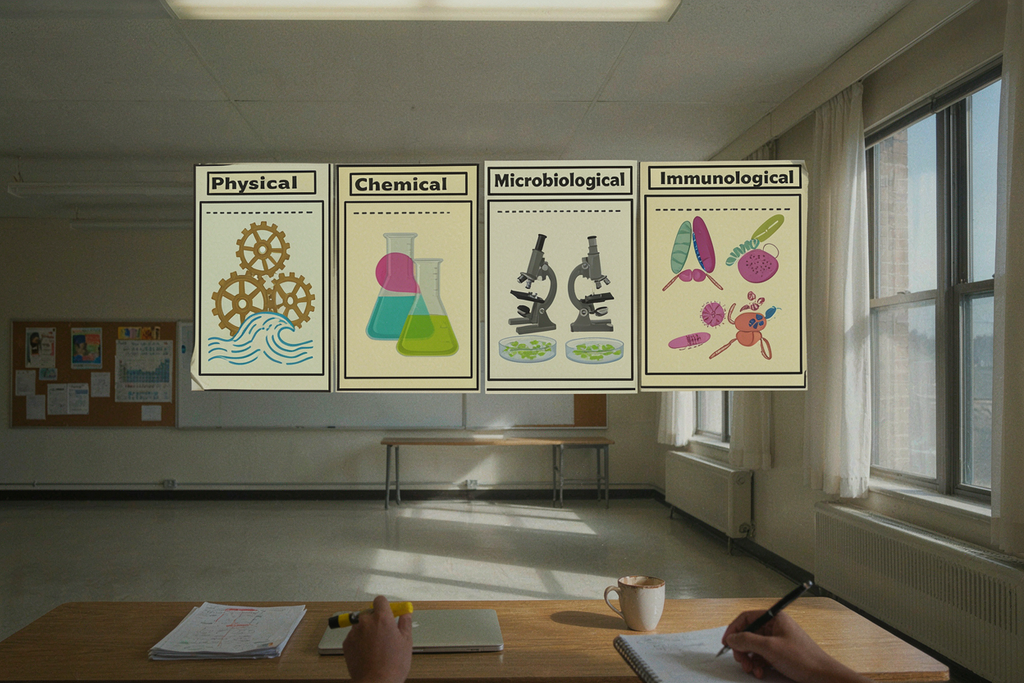
The skin barrier is the outermost layer of your skin, made up of tightly packed dead cells and lipids, that regulates water loss and blocks harmful substances, microbes, and physical damage from getting in. Researchers describe it as four interconnected systems- physical, chemical, microbiological, and immunological- working together rather than as one single wall.
That four-part structure is really the piece worth understanding, so let’s go through each one.
The Skin Barrier Is Four Barriers, Not One
A 2023 review published in Cells by Baker and colleagues frames the skin barrier as four interdependent layers: physical, chemical, microbiologic, and immunologic. Each one does its own job, and each one can fail on its own, separately from the others.
This matters more than it sounds like it should. A moisturizer that repairs the physical barrier won’t necessarily fix a disrupted pH, which is a chemical barrier problem entirely. That’s part of why “just moisturize more” doesn’t always solve barrier issues that are actually rooted somewhere else.
The Physical Barrier: Bricks and Mortar
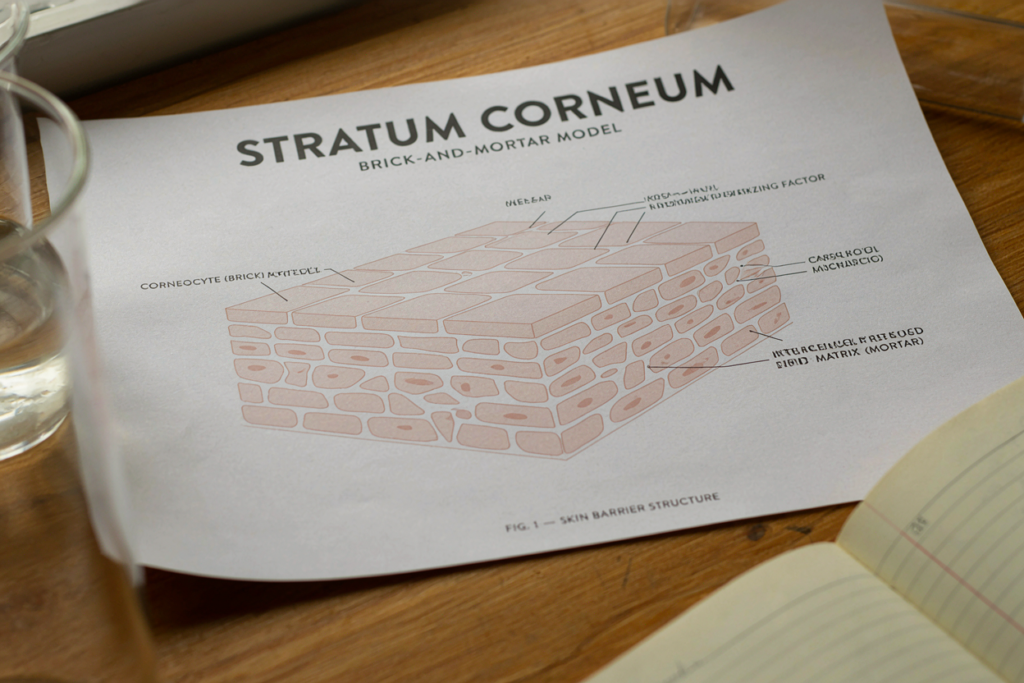
The physical barrier lives in the stratum corneum, the outermost layer of your epidermis. DermNet New Zealand describes its structure using the well-known bricks-and-mortar model: dead, flattened cells called corneocytes act as the bricks, and a lipid matrix made of ceramides, cholesterol, and fatty acids fills the space between them like mortar.
This arrangement handles two jobs at once. It slows transepidermal water loss, the water your body naturally loses through evaporation, and it blocks external molecules from diffusing in. How well it does both comes down to the lipid matrix’s organization and how many layers of corneocytes you’ve got, plus their size and how tightly they’re bonded.
Damage the physical barrier through over-exfoliation, harsh cleansers, or dry weather, and this is usually where you feel it first: tightness, flaking, a rougher texture than usual.
The Chemical Barrier: pH, Enzymes, and a Protein Called Filaggrin
Skin’s surface sits at a naturally acidic pH, typically somewhere between 4.5 and 5.5, according to DermNet. That acidity isn’t just incidental. Two enzymes, beta-glucocerebrosidase and acid sphingomyelinase, need that acidic environment to actually function, and they’re directly responsible for producing the ceramides and fatty acids that make up the physical barrier’s lipid mortar.
The acidity also keeps two enzymes called kallikrein 5 and 7 in check, enzymes that break down the proteins holding corneocytes together. Push the pH too high, using an alkaline soap, say, and those enzymes get more active, weakening the bonds between skin cells before they’re actually supposed to break down.
A protein called filaggrin plays a big role here too. It aggregates keratin filaments inside corneocytes and breaks down into what’s called natural moisturizing factor, a group of compounds that help skin hold onto water and keep that acidic pH in check. People with filaggrin gene mutations run a meaningfully higher risk for atopic dermatitis, since their barrier struggles with both hydration and pH regulation right from the start.
The Microbiological Barrier: A Population You Can’t See
Your skin’s acidity and intact structure work together to support a specific community of microorganisms, collectively called the skin microbiome, that naturally resists colonization by harmful bacteria. This is a genuine barrier function, not some passive side effect.
When the physical and chemical barriers break down together, often through over-cleansing or a damaged pH, this microbial balance shifts too. That’s part of why chronically dry, barrier-compromised skin often gets more prone to irritation and infection, not just dryness. The barrier isn’t only physical protection. It’s also about which organisms get to live on your skin, and in what proportion.
The Immunological Barrier: Cells on Watch
Immune cells sit throughout both the epidermis and dermis, ready to respond the second something breaches the physical barrier. Keratinocytes, the main cell type in the epidermis, and Langerhans cells handle much of this work at the surface, while dermal dendritic cells, mast cells, and various lymphocytes operate deeper down.
This system also produces antimicrobial peptides directly in the skin, made by keratinocytes, sebocytes, and sweat glands, giving the barrier an active chemical defense on top of its physical structure. When people talk about skin being “reactive” or “inflamed,” they’re often describing this immune layer responding to something the physical and chemical barriers already failed to stop.
What Happens When the Barrier Breaks Down
Barrier disruption rarely stays contained to just one of the four systems. Damage the physical layer, and transepidermal water loss goes up, which dries out the chemical environment, which can shift pH, which affects enzyme activity, which changes the microbiome, which can trigger the immune system into an inflammatory response. One failure point can cascade through all four before you even notice what started it.
You can see this play out in specific conditions. Atopic dermatitis is strongly linked to filaggrin mutations affecting the chemical barrier, but it also shows disrupted microbiome balance and immune overactivation, not just dry skin sitting there on its own.
Plain dry skin, without an underlying condition behind it, is more often a physical and chemical barrier issue driven by the environment, harsh products, or aging skin simply producing fewer natural lipids than it used to.
How the Skin Barrier Changes With Age
The skin barrier isn’t static across your lifetime, and the shifts are documented well enough to actually matter for how you adjust your routine. Newborn skin barrier function is still maturing in the first weeks of life, which is part of why infant skin is more prone to irritation and moisture loss than adult skin.
Barrier function then stays fairly stable through adulthood before naturally declining with age, as lipid production slows, corneocyte turnover slows down too, and the skin barrier holds onto water less effectively than it did back in your twenties.
This decline is exactly why the same moisturizer that worked fine for you at 25 sometimes feels inadequate by 45, even without any real change in climate or routine.
The physical barrier is simply producing fewer of its own lipids, so whatever product is filling that gap has to work harder. It’s also why dermatologists often recommend richer, more ceramide-dense formulas as a default shift with age, rather than waiting around for visible dryness to show up first.
The Vitamins Your Barrier Actually Needs
A few specific vitamins play direct, documented roles in keeping these systems running, according to DermNet’s review of barrier physiology.
- Vitamin A regulates keratinocyte proliferation and supports the skin’s innate immune responses.
- Vitamin B3, as nicotinamide, supports synthesis of the proteins and ceramides that build the physical barrier’s lipid matrix.
- Vitamin B7, or biotin, plays a role in keratin production, the structural protein forming corneocytes.
- Vitamin D contributes to innate immunity, keratinocyte differentiation, and filaggrin synthesis, tying it to both the immune and chemical barrier systems at once.
Deficiencies in any of these can measurably disturb barrier function, which is part of why nutrition, not just what you’re applying topically, factors into skin health more than most skincare marketing wants to admit.
Skin Barrier Function Across Different Skin Tones
How does skin barrier function across different skin tones? Skin barrier research has historically underrepresented darker skin tones, but the data that does exist points to real, measurable differences worth knowing about.
Studies comparing transepidermal water loss and stratum corneum structure across ethnic groups have found that skin with more melanin tends to have a higher number of cell layers in the stratum corneum, along with a different lipid composition, which can affect how quickly products actually penetrate and how the skin responds to mechanical stress from scrubbing or harsh exfoliation.
This doesn’t mean darker skin tones need some fundamentally different skincare philosophy, since the same four-system framework still applies across the board.
It does mean a one-size-fits-all recommendation for exfoliation frequency or product strength doesn’t account for documented structural variation, and it’s part of why post-inflammatory hyperpigmentation, an immune and pigmentation response to barrier injury, tends to show up more visibly and persistently in melanin-rich skin after the same degree of physical barrier disruption.
Common Skin Barrier Myths Worth Correcting
A few persistent claims about the skin barrier don’t really hold up against the research above, and they’re worth naming directly.
“You can repair your skin barrier overnight.” Barrier recovery is a layered, multi-system process, not a single event that happens all at once. A product can support recovery, sure, but the physical, chemical, microbiological, and immunological systems don’t reset in one application, no matter what the packaging claims.
“Natural products are automatically better for your barrier.” The skin barrier responds to pH, lipid composition, and formulation, not to whether an ingredient happens to be synthetic or plant-derived. A “natural” product with the wrong pH can disrupt the chemical barrier just as easily as a synthetic one can.
“If your skin isn’t flaking, your barrier is fine.” Visible flaking is a physical barrier symptom specifically. Your chemical, microbiological, or immunological systems can be genuinely compromised while the physical layer still looks totally intact, which is exactly why sensitivity and reactivity can show up with zero visible dryness at all.
Frequently Asked Questions
What is the fastest way to repair a damaged skin barrier?
There’s no universal fast fix here, since barrier repair depends on which of the four systems- physical, chemical, microbiological, or immunological- is actually the one compromised. Simplifying your routine to a gentle cleanser, a ceramide-based moisturizer, and sun protection while dropping active ingredients like retinoids and acids is the most broadly supported starting point across all four systems.
How long does it take for the skin barrier to heal?
Recovery time varies depending on how the barrier was damaged and which system took the hit, but mild disruption from over-exfoliation or harsh products often improves within one to two weeks of a simplified routine. More significant or chronic barrier dysfunction can take a lot longer than that.
Does skin barrier damage cause acne?
Barrier disruption can contribute to breakouts indirectly. A compromised physical or chemical barrier throws off the skin’s microbiome and increases irritation, both of which can worsen existing acne or trigger new breakouts, though barrier damage alone isn’t the sole cause of acne in most cases.
Can you have a healthy physical barrier but a damaged chemical barrier?
Yes, and this is exactly why the four-system model actually matters. Skin can have intact physical structure with zero visible flaking while still running an off-balance pH from an alkaline cleanser, which throws off enzyme activity and lipid production without necessarily causing any immediate visible damage.
Why do dermatologists recommend fragrance-free products for barrier repair?
Fragrance ingredients commonly trigger the skin’s immune response, provoking reactions in skin that’s already sensitized or inflamed. Cutting fragrance removes one variable that could trigger an immune response while the physical and chemical barriers are already trying to recover.
Conclusion
The skin barrier isn’t a single wall you either have intact or don’t. It’s four separate systems- physical, chemical, microbiological, and immunological- that depend on each other and can each fail on their own terms. Knowing which one is actually struggling, instead of defaulting to “just moisturize more,” is what separates a routine that fixes the real problem from one that just piles another layer on top of it.
Want to see how this framework applies directly to a specific ingredient known for supporting barrier repair? Our guide to ceramides in skincare breaks down exactly how they rebuild the physical layer described above.
For more guides on skincare, you can visit our website, Healnurtura