
Spicule serum vs. microneedling devices: Which to buy?
You’ve got a $20 spicule serum in one browser tab and a $130 microneedling device in another, and both promise the same thing: smoother skin, better product absorption, results without a dermatologist’s office.
They’re not actually competing for the same job. One works in the top few hundred micrometers of your skin. The other can reach ten times deeper, into the dermis, where real structural change happens. That gap in depth is the entire reason your budget, your downtime, and your realistic results will look completely different depending on which one you pick. Here’s the real comparison, with actual pricing and actual research behind each side.
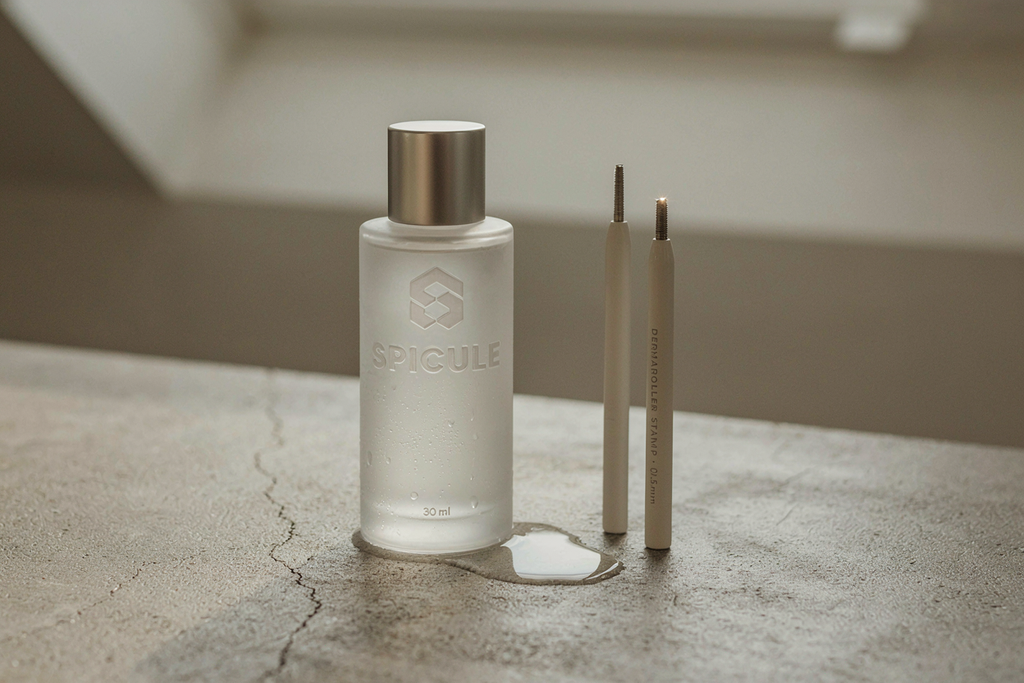
Spicule Serum vs. Microneedling Devices: Which Should You Buy?
Choose a spicule serum if you want zero downtime, an easy nightly routine, and better absorption for your existing products. Choose an at-home microneedling device if you’re targeting acne scars, deeper wrinkles, or skin laxity, and you’re willing to trade some downtime and a higher upfront cost for a stronger, dermis-level collagen response.
That’s the short answer. The reasoning behind it comes down to three things: depth, price, and what the actual research supports for each category.
The Real Difference Is Depth, Not Marketing
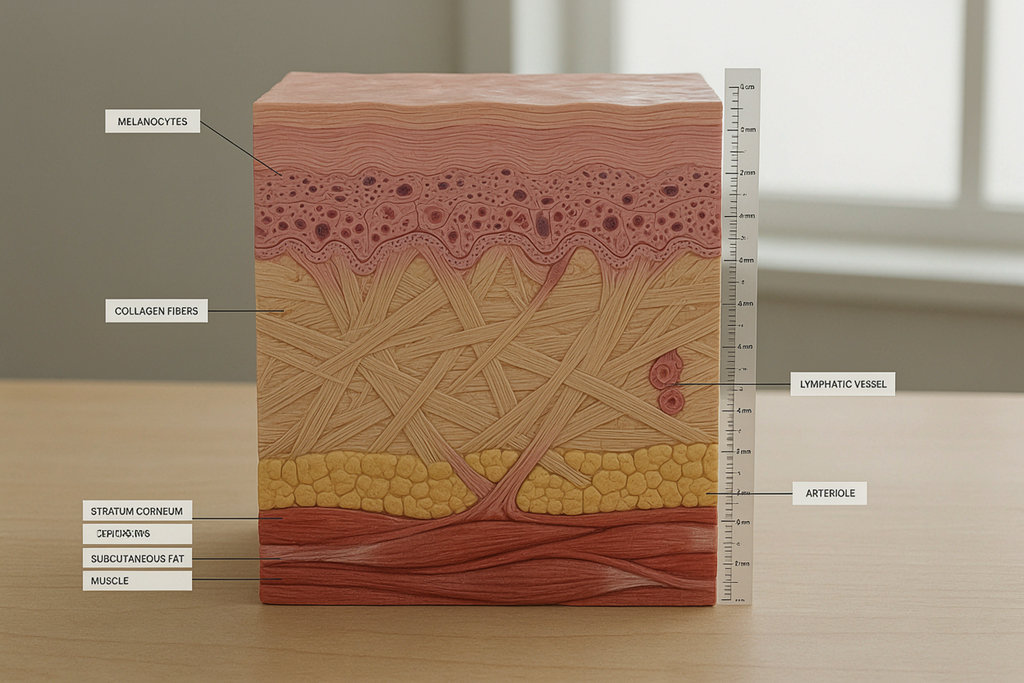
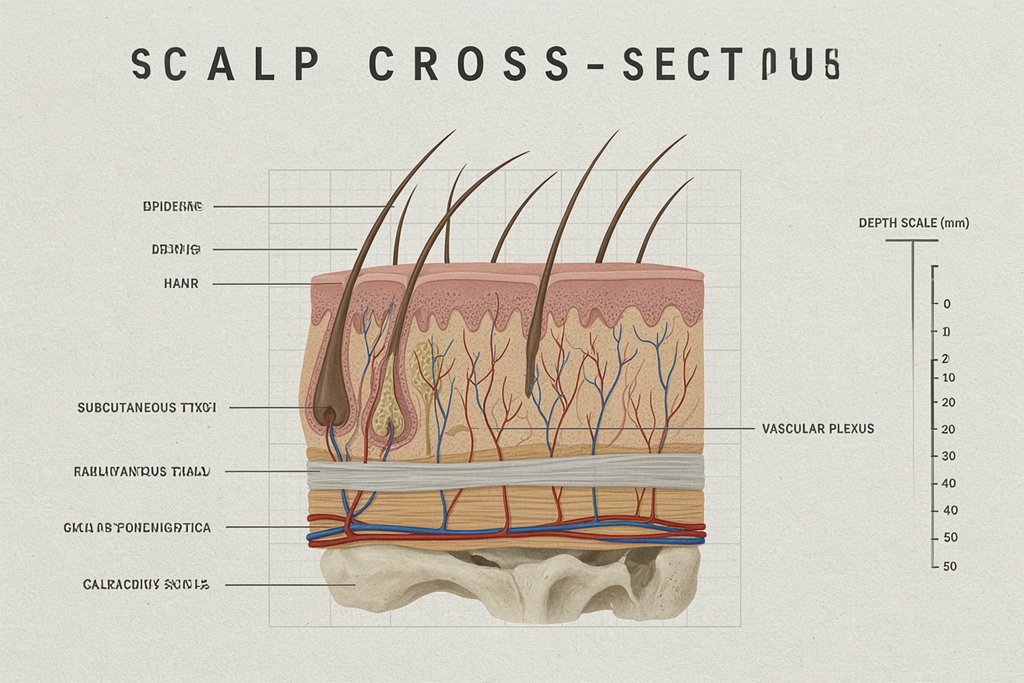
Spicules are microscopic, needle-shaped structures that reach roughly 100 to 300 micrometers into the skin, staying within the epidermis. At-home microneedling devices go considerably further. Dermarollers and stamping tools typically use needles between 0.25mm and 2.5mm, and even the shortest common setting, 0.25mm, is still close to the top end of what spicules reach.
Once a device passes roughly 0.5mm, it crosses into the dermis, where fibroblasts actually produce collagen and elastin. Spicules, by design, don’t get there. This single fact explains almost every other difference on this page.
Price Comparison: What You’ll Actually Spend
Here’s how the real numbers stack up, based on current US pricing:
Spicule serums:
- Budget options like Medicube’s Exosome Shot Zero: $10 to $20, often discounted
- Mid-range formulas like Aprilskin’s TXA Niacinamide Toning Shot: around $19
- VT Cosmetics Reedle Shot line at Ulta Beauty: $12 to $24 per item
At-home microneedling devices:
- Basic dermarollers: roughly $10 to $45 depending on brand and needle count
- Stamping devices with replaceable heads, like the Banisher 3.0: around $130 for the kit, with replacement heads adding ongoing cost
- Motorized dermapens with disposable cartridges: $214 to $315 upfront, plus $60 or more for a pack of ten single-use cartridges
A spicule serum is a repeat consumable purchase, similar to buying a new tube of sunscreen every couple of months. A microneedling device is more like buying a tool: a higher one-time cost with smaller ongoing expenses for replacement parts. If you’re testing the waters before committing to a routine, spicules are the lower-risk financial entry point.
Downtime and Pain: What Each One Actually Feels Like
This is where the two categories split hardest.
A spicule serum, used correctly, causes a brief tingling sensation during application and mild redness that typically fades within an hour or two. You can apply makeup and go about your day the next morning without any visible sign you did anything to your skin the night before.
These devices are a different commitment entirely. Even at the shortest common needle length, 0.25mm, expect visible redness for several hours to a day. At 0.5mm and beyond, that redness can last one to three days, and deeper settings used for acne scarring often come with pinpoint bleeding during the session itself. Motorized pens, which can go as deep as 2.5mm, frequently require numbing cream beforehand, adding real prep time to each session.
That numbing step deserves a direct warning. The FDA has specifically cautioned against certain topical pain relief products used for procedures like this, citing the risk of serious, sometimes life-threatening reactions from over-applying numbing cream, particularly over large areas. If a device’s instructions call for numbing, follow the product’s guidance exactly rather than applying more than directed.
What the Actual Research Shows
Both categories have real, peer-reviewed research behind them, but they’re not proving the same thing.
For microneedling devices, a 2008 study in Plastic and Reconstructive Surgery followed 480 patients and found 60 to 80 percent improvement ratings, with histological confirmation of increased collagen and elastin at six months post-treatment. A 2015 study in the Journal of Clinical and Aesthetic Dermatology found that multiple microneedling sessions increased collagen types I, III, and VII along with epidermal thickness specifically in patients with atrophic acne scars. A 2021 systematic review of nine randomized controlled trials, published in the International Wound Journal, concluded microneedling is a well-tolerated, effective treatment for atrophic scars, whether used alone or alongside other treatments.
Research on spicules tells a different story, one centered on delivery rather than deep collagen remodeling. A 2022 study in the Journal of Cosmetic Dermatology measured spicules at roughly 250 micrometers and found a 73.4 percent dermal absorption rate for a test formula, confirming the mechanism works well for getting other ingredients into the skin. What that study didn’t measure was dermal collagen synthesis, since spicules generally don’t reach deep enough to trigger the same response microneedling devices do.
Neither body of research is weaker than the other. They’re answering different questions, because the two products are built to do different jobs.
Which One Actually Builds More Collagen
If collagen induction is your primary goal, the research points clearly toward microneedling devices. Reaching the dermis is a requirement for triggering the kind of fibroblast activity that produces new collagen and elastin, and spicules, staying within the epidermis, simply don’t get there in most formulations.
Spicules can still support a modest firming effect, mostly as a byproduct of better ingredient absorption and increased cell turnover in the epidermis, but it’s a smaller-scale effect than what a properly used microneedling device at 0.5mm or deeper can produce. If you’re specifically trying to address acne scarring, deep wrinkles, or noticeable skin laxity, a device is the better-supported tool for that job.
Who Should Avoid Each One
Skip spicule serums if you have:
- Active rosacea, eczema, or another inflammatory skin condition
- Broken or actively picked skin
- A current prescription retinoid or strong acne medication without dermatologist guidance
Skip a device if you have:
- Active acne, since needling over breakouts can spread bacteria and worsen inflammation
- A history of keloid scarring
- Rosacea or eczema
- A recent chemical peel or laser treatment
- Pregnancy, or if you’re taking blood thinners
Both categories carry a shared rule worth repeating: when in doubt, check with a dermatologist before starting, especially if you have a diagnosed skin condition already being treated.
Can You Use Both in the Same Routine?
Yes, but not on the same day. Since spicules work in the epidermis and a device goes deeper, using both eventually isn’t contradictory; it’s layering two different depths of treatment. The sequencing matters, though. After a microneedling session, give your skin a full five to seven days to heal before reintroducing spicules, since applying anything exfoliating onto still-recovering, freshly needled skin adds irritation risk without a real benefit.
Once healed, some people alternate: a microneedling session every few weeks for deeper structural work, spicules two to three times a week between sessions to maintain absorption and texture benefits. Treat them as two tools solving different problems rather than one replacing the other.
Which Should You Buy? A Quick Decision Guide
- You want zero downtime and an easy nightly habit: spicule serum.
- You’re mainly trying to boost how well your other serums absorb: spicule serum.
- You’re targeting acne scars, deep wrinkles, or noticeable laxity: a microneedling device, ideally starting at 0.25mm to 0.5mm.
- You have a tight upfront budget but want to try something: a basic dermaroller or a spicule serum, both land under $50.
- You want the strongest at-home collagen response and don’t mind downtime: a stamping device or motorized dermapen, used exactly as directed.
- Your skin is reactive, inflamed, or currently being treated for a condition: neither, until you’ve checked with a dermatologist.
What Actually Happens Week by Week
Seeing the realistic timeline side by side makes the depth difference concrete rather than abstract.
In week one, expect a brief tingling feeling after each night the serum goes on, with any redness settling within an hour. By week two or three, if you’re using it two to three times weekly, texture usually improves first, since the combination of gentle exfoliation and better ingredient absorption compounds over repeated use. A subtle firmness improvement can show up by week six to eight, though this remains a modest effect tied mostly to the epidermis rather than bigger structural change.
The device timeline runs differently. Redness and sensitivity dominate the first 24 to 72 hours after each session, especially at 0.5mm and beyond. Visible texture changes tend to show up within four to eight weeks of consistent sessions spaced appropriately apart. For genuine acne scar improvement, the research cited above points to a three- to six-month window of regular treatment before results become clearly visible, since collagen remodeling in the dermis is a slow biological process that doesn’t happen overnight regardless of which tool triggers it.
Which Wins for Product Absorption Specifically
If your main goal is getting more out of the serums you already own, rather than treating scarring or wrinkles, this comparison tilts differently than the collagen question above.
Spicules were specifically engineered around this use case. Their shallow depth means they open channels in exactly the layer where most skincare actives need to penetrate to work, without triggering the longer recovery window a deeper device requires. You can layer a hydrating serum or a brightening ingredient right after spicule use and expect that absorption boost the same night, then repeat the process two or three times a week without much recovery time between sessions.
A device technically opens deeper channels too, and some brands include a serum specifically formulated to pair with their tool. But the longer downtime between sessions means fewer total absorption-boosted applications per month compared to a routine using spicules several times weekly. If daily or near-daily enhanced absorption is genuinely your goal, spicules fit that use case more naturally than a tool built around less frequent, deeper sessions.
Frequently Asked Questions
Is a spicule serum as effective as a microneedling device?
Not for the same goal. Spicules are genuinely effective at boosting ingredient absorption and refining surface texture, but they work at a shallower depth than a device and can’t replicate the dermal-level collagen response a properly used one produces.
Which is safer for beginners, spicules or a device?
Spicules generally carry lower risk for first-time use, since there’s no technique to learn and no needle depth to select. If you’re starting with a device, the shortest common needle length, 0.25mm, used no more than two to three times a week, is the safer entry point.
Do I need numbing cream for either option?
No numbing is needed for spicules. For a device, it depends on needle depth. Shorter needles, 0.25mm to 0.5mm, typically don’t require it, while deeper settings on motorized pens often do. Follow product instructions exactly if numbing cream is recommended, since overuse carries real safety risks.
Can I switch from spicules to a device later?
Yes. Many people start with spicules to test their skin’s tolerance for mechanical exfoliation before investing in a device. If spicules go well and you want deeper results, one is a reasonable next step, starting at the shortest available needle length.
Which option is better for acne-prone skin?
Neither should be used directly over active breakouts. Once acne is under control, spicules tend to be the gentler option for ongoing maintenance, while a device is better reserved for treating scarring left behind after active acne has cleared.
Making the Call
The choice really comes down to what depth your skin concern actually lives at. Surface texture and absorption problems live in the epidermis, where spicules work. Scarring, deep wrinkles, and laxity live in the dermis, where only a proper microneedling device reaches.
Pick based on that, not on price alone or which one is trending this month, and you’ll spend your money on the tool actually built for your specific problem.
Want the full breakdown of how to introduce a spicule serum safely once you’ve decided that’s the right starting point? Our patch-testing guide walks through exactly that.
For more guidance on Spicule vs Microneedling, which one is best you can read our article.