
Spicule Skincare Side Effects: Who Should Avoid It
You bought the serum, or someone sent you a video of a Korean derm pressing a needle-like powder into skin, and now you’re standing in front of your bathroom mirror asking one question: Is this going to hurt my face? That’s the right question to ask before anything else. Spicule skincare works by physically piercing the outer layer of your skin, and that single fact is why some people see smoother texture within a week while others end up red, tight, and regretful. This guide walks through exactly who should skip spicule skincare, why their skin reacts the way it does, and how to run a real patch test before you commit your whole face to it. Understanding spicule skincare side effects before you start is the single most useful thing you can do for your skin this week.
Who Should Avoid Spicule Skincare? (Quick Answer)
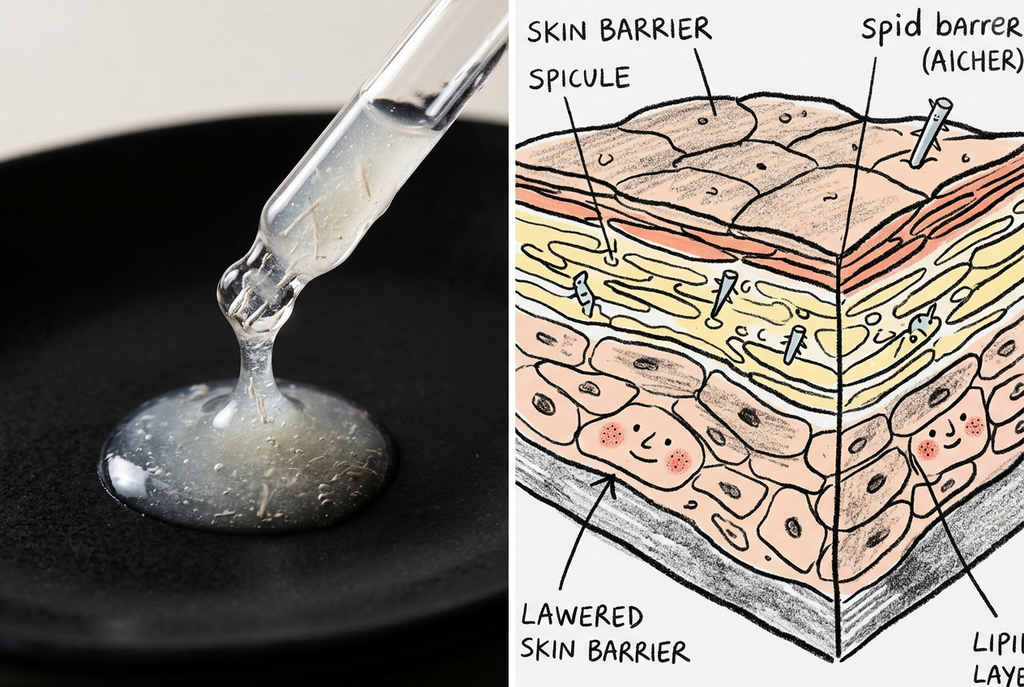
People with active acne, rosacea, eczema, or any broken or inflamed skin should avoid spicule skincare, along with anyone using retinoids, isotretinoin, or AHA/BHA exfoliants, and anyone pregnant or breastfeeding. Spicules create microchannels in the skin barrier, and compromised or medicated skin cannot tolerate that disruption safely.
That one paragraph covers the short version. The rest of this article covers the reasoning, the specific timelines for medications, and the exact steps to test your own skin before you decide.
What Spicules Actually Do to Your Skin Barrier
A spicule is a microscopic, needle-shaped structure harvested from the skeleton of a marine sponge, made mostly of silica or calcium carbonate. Suspended in a serum or patch and pressed into the face, these structures pierce the stratum corneum, the tough outermost layer of dead cells that normally keeps water in and irritants out.
A 2022 review in the Journal of Cosmetic Dermatology documented that spicule structures create tiny channels in the epidermis that support the movement of ingredients into the upper skin layer, confirming the piercing mechanism behind the trend. A separate clinical trial published in Annals of Dermatology tracked twenty participants using spicules combined with epidermal growth factor around the eye area and found measurable improvement in wrinkle depth and dermal density compared with growth factor alone, though the same researchers noted mild, short-lived redness and tingling as the main side effects and flagged that lifestyle and other skincare habits weren’t controlled for, which limits how far the results generalize.
That piercing depth stays shallow, generally in the range of a few tenths of a millimeter, so spicules sit closer to a light physical exfoliant than a clinical procedure. The distinction matters because your skin doesn’t experience “shallow” and “safe” as the same thing. A barrier that’s already thin, inflamed, or medicated can register even a shallow puncture as an assault, and that’s the mechanism behind almost every one of the spicule skincare side effects covered in this guide.
Skin Conditions That Rule Out Spicule Skincare
Certain skin conditions involve a barrier that’s already compromised before the spicules ever touch it. Adding controlled injury on top of existing injury rarely ends well.
Active or Cystic Acne
If you have inflamed, pustular, or cystic acne, spicules can push bacteria deeper into the follicle and spread infection to skin that wasn’t affected before. The microchannels don’t discriminate between the active ingredient you want absorbed and the Cutibacterium acnes bacteria already sitting on your skin’s surface. Treating an active breakout with a physical exfoliation method tends to prolong healing and raises the odds of scarring.
Rosacea and Reactive Skin
Rosacea-prone skin already runs a lower threshold for flushing, burning, and visible blood vessels. Piercing that skin with spicules triggers the same inflammatory cascade that causes a flare, and the redness that follows can outlast the mild tingling a tolerant user might feel. Dermatologists interviewed on the trend have specifically named rosacea as one of the conditions where spicules should be skipped rather than tested cautiously.
Eczema, Dermatitis, and Any Broken Skin
Eczema and atopic dermatitis come with a barrier that’s structurally leaky at a cellular level, long before any product touches it. Spicules on skin like that don’t create a controlled microchannel; they widen an already-open door for water loss and irritants. The same logic applies to sunburned skin, active cold sores, popped pimples, or any patch of skin with a visible break. If the surface isn’t intact, spicules stay off the table until it heals.
Chronically Dry or Barrier-Compromised Skin
Dryness that shows up as persistent flaking, tightness, or a stinging reaction to plain water often signals a barrier that’s already struggling to hold moisture. Spicules increase transepidermal water loss on skin like this, and the result is often more dryness rather than the smoother texture the product promises. Menopausal skin, which tends to lose lipid content and thin over time, falls into this same higher-risk group.
Medications and Actives That Don’t Mix With Spicules
Some of the riskiest combinations have nothing to do with a diagnosed condition. They come from what’s already in your medicine cabinet.
Retinoids and Retinol
Retinoids already increase cell turnover and thin the outer skin layer as part of how they work. Layering spicules on top adds a second mechanism doing something similar, and the combined effect on the barrier goes well past what either ingredient does alone. A cosmetic doctor quoted on the spicule trend put it plainly: retinoids and exfoliating acids don’t need help penetrating the skin barrier, and pairing them with spicules tends to increase side effects rather than results.
Isotretinoin (Accutane)
This is the medication that deserves the most caution on this entire list. The American Academy of Dermatology specifically warns patients on oral isotretinoin away from exfoliants, including alpha-hydroxy acids, beta-hydroxy acids, and exfoliating beads, because the drug already makes skin more sensitive. Clinical case reports have also documented isotretinoin-induced skin fragility, and most treatment warnings recommend avoiding cosmetic procedures such as dermabrasion, laser treatment, waxing, and chemical peels while a patient is on the medication. Spicule application falls squarely into that same category of physical exfoliation. If you’re currently taking isotretinoin, or finished a course within the past six months, treat spicules the same way you’d treat a chemical peel or microneedling session and hold off until your prescribing dermatologist confirms your skin has recovered its normal barrier function.
AHAs, BHAs, and Chemical Peels
Glycolic acid, lactic acid, salicylic acid, and any at-home peel already thin the stratum corneum chemically. Running spicules over that same skin on the same night stacks two exfoliation methods and pushes past what a resilient barrier can absorb, let alone a sensitive one. Most dermatologists recommend alternating nights between spicules and chemical actives rather than combining them, and starting with the gentler of the two until you know how your skin responds.
Recent Laser, Microneedling, or Injectables
Skin that’s still healing from a laser session, professional microneedling, filler, or any injectable treatment is not the skin to introduce a new physical exfoliant on. Give any in-office procedure the full recovery window your provider recommends, typically somewhere between two and six weeks depending on the treatment, before adding spicules back into rotation.
Life Stages That Call for Extra Caution
Age and hormonal status change how your skin barrier behaves, and a few groups deserve their own callout.
Pregnancy and Breastfeeding
Spicule products haven’t been studied in pregnant or breastfeeding populations, and the safety data that exists comes from small trials on general adult skin, not this specific group. Skin also becomes more reactive and sensitive during pregnancy for a lot of people, which raises the odds of an unexpected reaction. Most skincare experts covering this ingredient recommend skipping spicules entirely until after pregnancy and breastfeeding rather than treating the absence of evidence as evidence of safety.
Teens and Younger Skin
Teenage skin, especially skin still dealing with active breakouts or on acne medication, fits into the same higher-risk category outlined above. A younger complexion also tends to have a naturally faster turnover cycle already, so it rarely needs an extra physical exfoliation method layered on top.
Very Mature or Thinning Skin
Skin thins with age as collagen density and lipid production decline, and that thinner structure has less cushion to absorb a physical puncture without irritation. If your skin has become noticeably more fragile, bruises more easily, or takes longer to heal from minor scrapes, treat that as a signal to skip spicules or introduce them at the lowest possible frequency under a dermatologist’s guidance.
Side Effects You Might See Even If You’re a Good Candidate
Even people without any of the conditions above can experience side effects, especially early on. The most common reaction is temporary redness and a stinging or tingling sensation right after application, usually settling within an hour. Some people notice mild tightness, light flaking, or a rough texture for a day or two afterward as the skin’s outer layer adjusts.
Less common but worth watching for: prolonged redness that doesn’t fade after a few hours, visible swelling, or a burning sensation that intensifies instead of easing off. Any of those point to a dose that’s too strong or too frequent for your skin, not a normal adjustment period. Post-inflammatory hyperpigmentation is also a real risk for anyone prone to dark marks, since spicules trigger inflammation and inflammation is what drives that pigment response in the first place.
How to Patch Test Spicules Before Using Them on Your Face
If none of the categories above apply to you, a patch test still comes before a full-face application, every time.
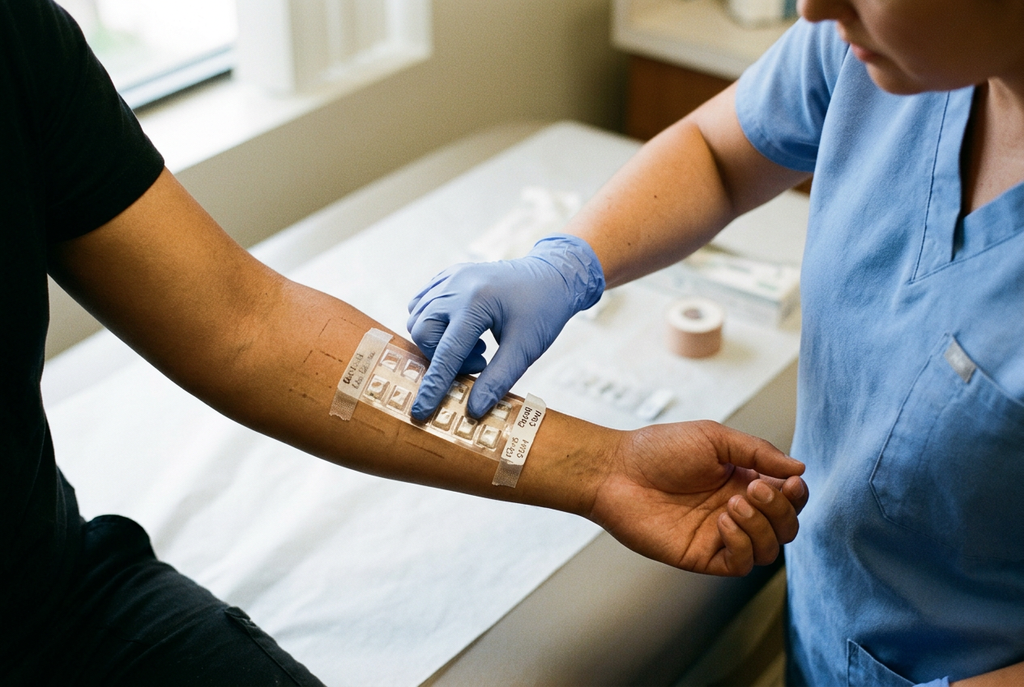
Apply a small amount of the product to an inconspicuous area, like the inside of your forearm or just behind your jawline, following the product’s exact directions. Wait 24 to 48 hours and watch for redness that doesn’t fade, swelling, itching, or a burning sensation that gets worse instead of better. If your skin looks and feels normal after that window, apply a small amount to one section of your face, such as one cheek, rather than the entire face on the first try. Wait another 24 hours and check for the same warning signs before expanding to full-face use. Once you’ve confirmed tolerance, start with the lowest frequency the product recommends, often two to three times a week, and increase gradually rather than jumping straight to daily use.
Keep spicules on a separate night from retinoids, prescription acne treatments, or chemical exfoliants, and always follow application with a plain, barrier-supporting moisturizer and a broad-spectrum sunscreen the next morning, since freshly exfoliated skin is more vulnerable to UV damage.
Frequently Asked Questions
Can I use spicule skincare if I have sensitive skin but no diagnosed condition?
Sensitive skin without a diagnosed condition can sometimes tolerate spicules in low doses, but it’s the group most likely to need a longer patch test window and a slower introduction schedule. Start with the mildest formula available, test for at least 48 hours before facial use, and stop immediately if you see redness that lasts longer than an hour.
How long after stopping retinol can I start using spicules?
Most dermatologists recommend waiting until any peeling or flaking from retinol has fully resolved, which is typically one to two weeks after your last application, before introducing a physical exfoliant like spicules. If you’re unsure, a patch test on a small area is a safer way to confirm your barrier has recovered than guessing at a timeline.
Do spicules cause permanent damage to the skin barrier?
Used correctly, on appropriate skin, at a reasonable frequency, spicules are designed to create only temporary microchannels that close as part of normal skin turnover. Overuse on compromised skin, or continued use despite ongoing irritation, is what turns a temporary disruption into longer-lasting barrier damage.
Is it safe to use spicule skincare around the eyes?
The eye area has thinner skin than the rest of the face, which is exactly where the periocular spicule study referenced earlier focused its testing, and it did show measurable results for fine lines in that specific trial. That said, thinner skin also means a lower margin for error, so this is an area to introduce last, after your face has already tolerated spicules elsewhere, and never during a flare of any kind.
What should I do if my skin reacts badly to a spicule product?
Stop using the product immediately and rinse the area with cool water. Skip other actives like retinol or acids for a few days, apply a fragrance-free barrier moisturizer, and use sunscreen daily until the redness and sensitivity fully resolve. If swelling, blistering, or pain develops, contact a dermatologist rather than waiting it out.
Can pregnant women use spicule-infused skincare?
Most experts recommend against it, not because a specific harm has been documented, but because spicule products haven’t been tested in pregnant populations and pregnancy already tends to make skin more reactive. Waiting until after pregnancy and breastfeeding removes an unnecessary variable during a period when your skin is already adjusting to hormonal changes.
Bottom line
Spicule skincare rewards resilient, unmedicated, uninflamed skin and punishes everything else. Weighing the real spicule skincare side effects against who should avoid it before you buy saves you a week of red, tight, unhappy skin. If you fall into any of the categories above, the smartest move is to skip it, address the underlying condition or medication timeline first, and revisit spicules once your skin is a genuinely good candidate rather than a hopeful one.